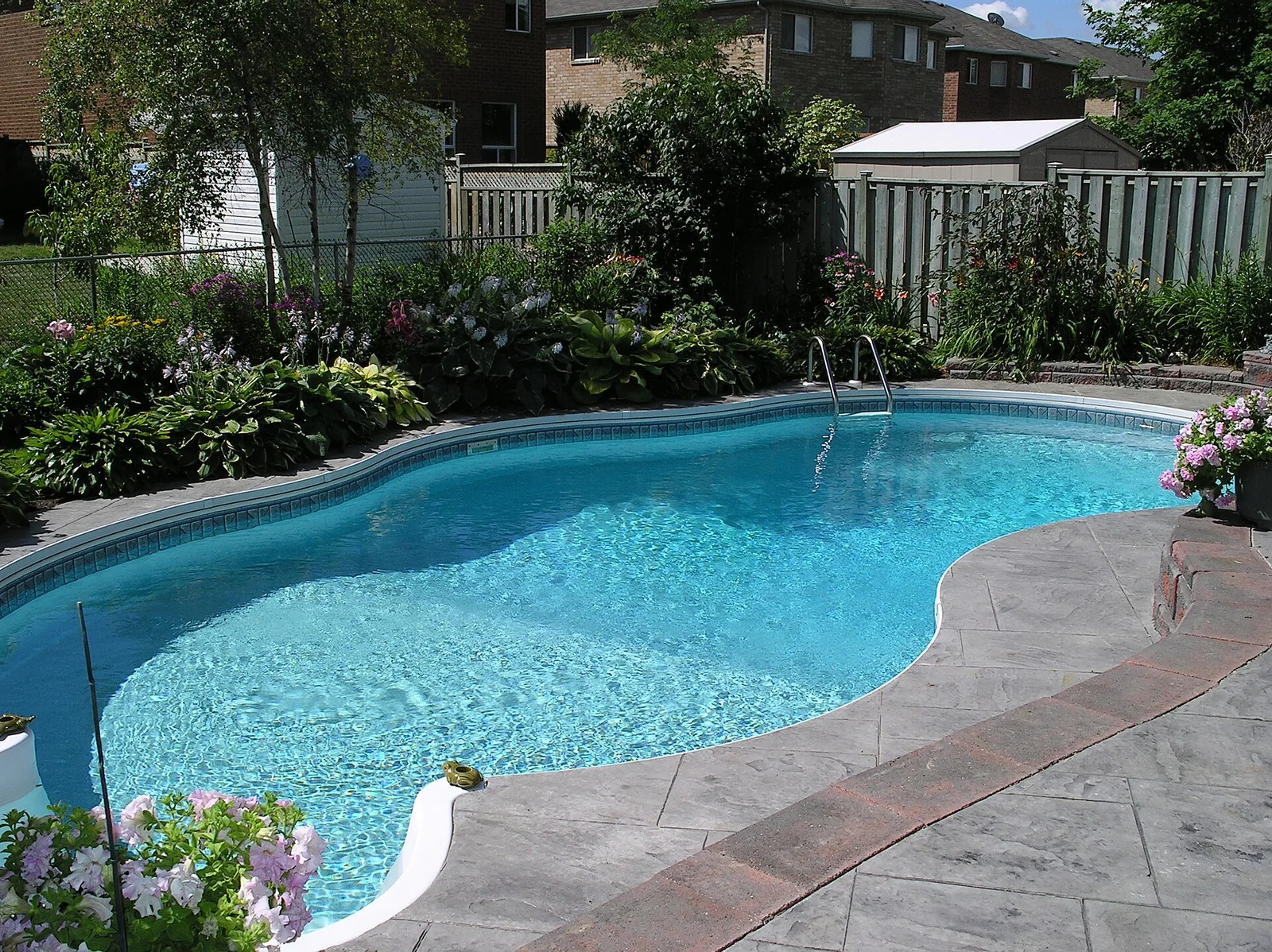
Identify common Central Florida pool stains by pattern and texture, avoid unsafe treatment guesses, and choose maintenance, testing, or renovation.
A pool stain should be identified before it is treated. In Central Florida, a brown mark may be tannin left by a leaf, iron deposited from fill water, dead algae, or discoloration in an aging finish. White buildup may be calcium scale, but a pale rough area can also be etched plaster. Color alone is not a diagnosis. The pattern, texture, water condition, surface material, and recent history determine the right next step.
Key Takeaway
Start with observation, brushing, and complete water testing. A localized mark where debris rested usually points toward organic material. Broad color changes after adding water or changing chemistry deserve metal testing. Hard, raised deposits suggest scale. Roughness, pitting, cracking, or color variation that does not respond to cleaning may be finish damage rather than a removable stain.
Do not pour acid, chlorine, stain remover, or another product onto an unidentified mark. Treatment depends on pool volume, test results, product concentration, finish type, and manufacturer directions. The wrong chemical or brush can bleach a liner, damage a coating, etch plaster, or release metals back into the water.
Use Pattern and Texture Before Color
Several unrelated problems can look brown, green, black, gray, or white. Inspect the entire pool in daylight before changing the chemistry.
| What you observe | More likely category | Best first check |
|---|---|---|
| Leaf-shaped or sharply localized brown mark | Organic tannin | Remove debris, brush with a surface-approved brush, and monitor |
| Slimy, dusty, or spreading green or dark area | Algae or biofilm | Test sanitizer and pH, then compare with the Florida algae identification guide |
| Broad rust, tea, blue-green, or dark discoloration | Dissolved metal precipitation | Test pool water and recent fill water for iron, copper, and manganese |
| Hard, raised, chalky white deposit | Mineral scale | Test pH, alkalinity, calcium hardness, temperature, and overall water balance |
| Rough, pitted, cracked, faded, or mottled finish | Surface wear or finish variation | Document the area and request a finish assessment before chemical treatment |
| Dark ring or greasy film at the waterline | Surface buildup | Use only a cleaner and pad approved for the tile or finish |
The National Plasterers Council explains that mineral scale and metal precipitation can affect many water-contact materials. It also notes that some color variation is inherent in cement-based finishes. An isolated mark, a raised deposit, and uniform mottling should not receive the same treatment.
Five Categories That Homeowners Commonly Confuse
Organic debris
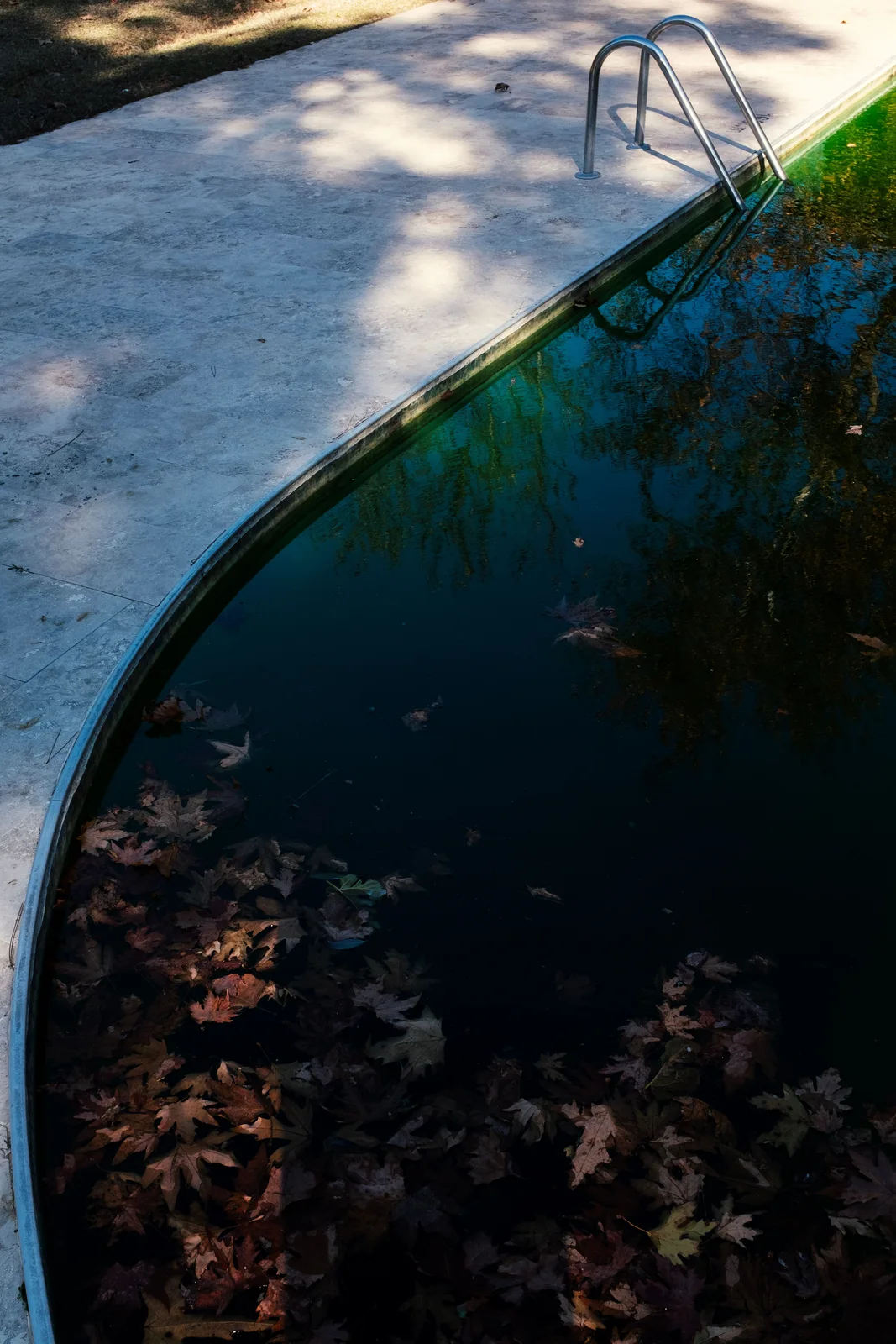
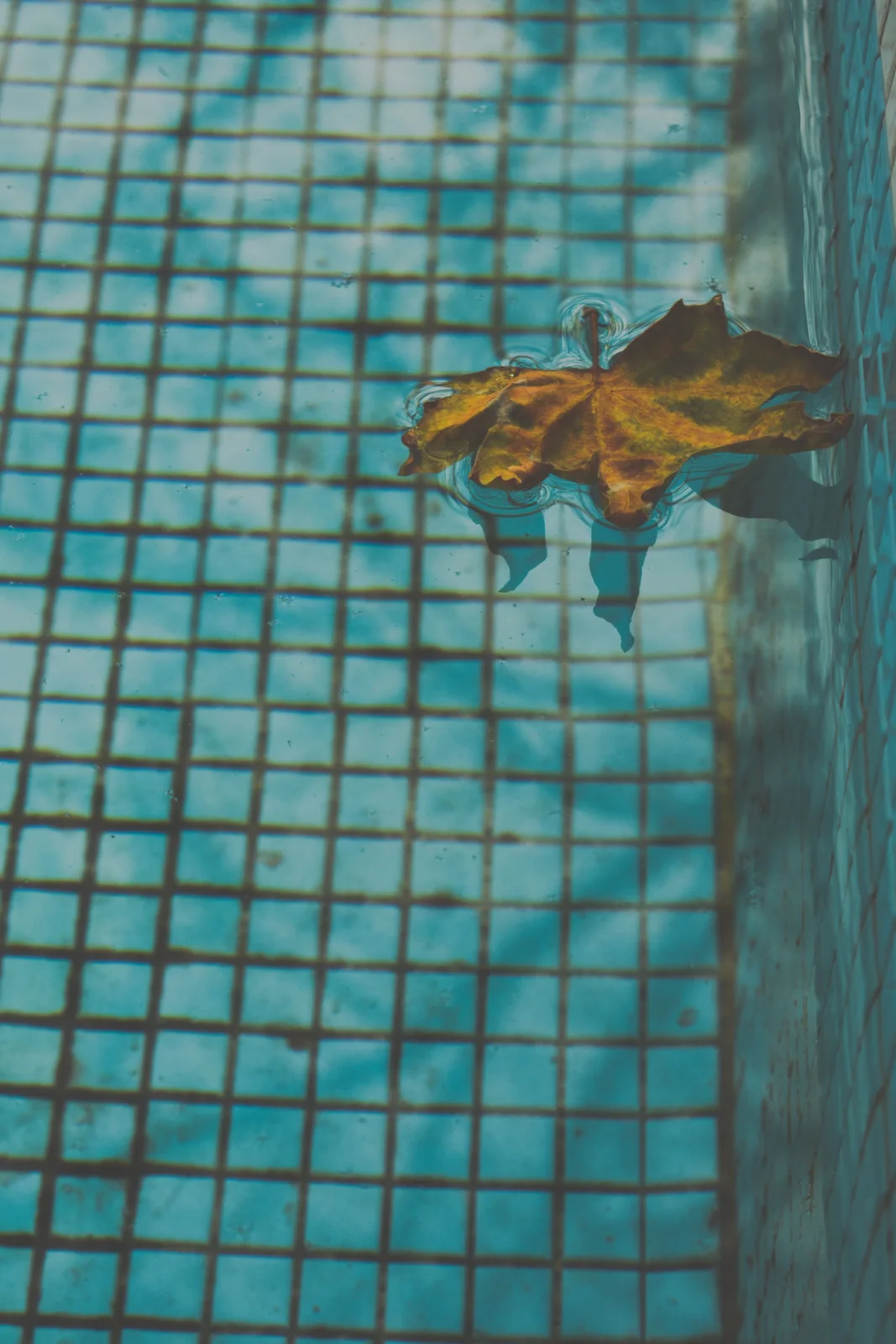
Leaves, acorns, seed pods, bark, and other plant material release tannins as they break down. These marks are often localized and follow the shape or resting place of the debris. Central Florida pools under mature landscaping can collect this material quickly when fall fronts and late-season storms move through.
Remove debris promptly, keep baskets clear, and use a brush approved for the surface. A fading mark differs from one that spreads, becomes slimy, or returns in the same low-circulation area.
Algae and biofilm
Algae is living growth, not simply discoloration. It may feel slippery, release dust when brushed, spread into nearby areas, or accompany cloudy water and weak sanitizer. Black algae can form persistent dark spots in porous plaster, while mustard algae can look like dust or pollen on shaded surfaces.
Treating a metal stain as algae wastes chemicals. Treating active algae as cosmetic leaves a sanitation problem. Confirm water chemistry and behavior first.
Metals in the water
Iron, copper, and manganese can remain dissolved until oxidation or a chemistry change makes them visible. The National Plasterers Council identifies elevated metals in fill water as a staining source. A pool that changes color after a refill, well-water addition, equipment corrosion, or chemical adjustment needs water testing.
Lifting a metal stain is only half the job. The source and metal held in the water still need a control or removal plan, or discoloration can return.
If the cause is unclear or the stain is spreading, Cole's Pool Service & More can review the pool's water history, surface, and maintenance conditions. Homeowners in DeBary, Deltona, Orange City, Sanford, Heathrow, Lake Mary, Longwood, and DeLand can also ask about weekly pool maintenance that tracks chemistry and removes debris before recurring stains develop.
Calcium scale
Scale is a mineral deposit, not a pigment. It commonly feels hard or raised and may collect at the waterline, on tile, or around spillways. Water balance, temperature, and evaporation affect whether calcium carbonate stays dissolved or deposits.
Do not assume every white area is scale. Etched plaster can look pale while feeling rough or porous, and aggressive acid use can make that damage worse. Complete water testing and a close surface inspection should come before a removal method.
Finish wear, mottling, or damage
Plaster and aggregate finishes naturally vary. Persistent roughness, pitting, exposed aggregate, cracking, or widespread discoloration can signal a renovation issue rather than a cleaning problem.
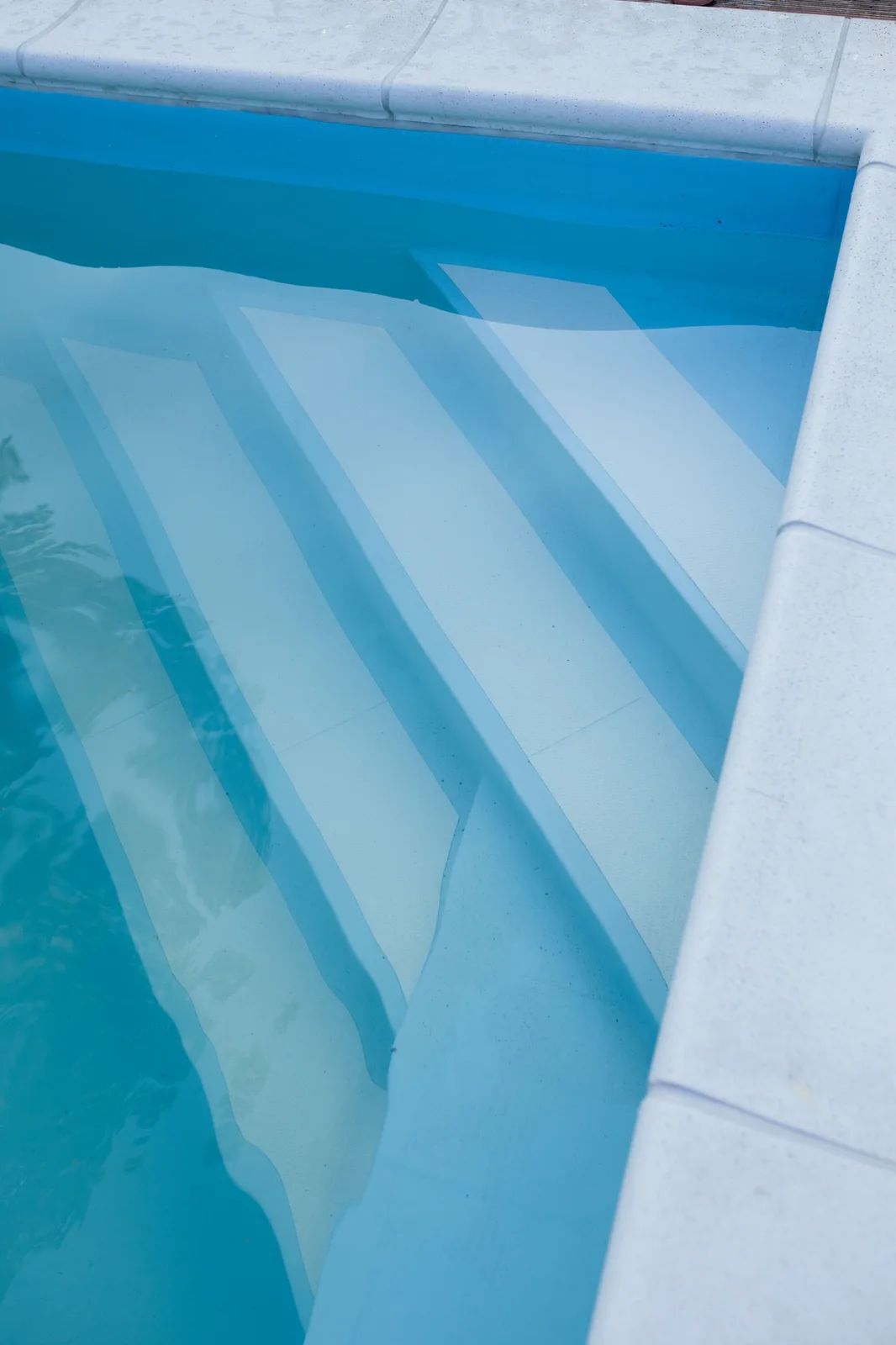
Compare persistent roughness and finish wear with the Central Florida resurfacing guide. If the surface is near the end of its useful life, repeated stain treatments may improve appearance temporarily without correcting the substrate.
A Safe Pool-Stain Inspection Order
Use this sequence before buying a treatment:
- Photograph the mark in daylight. Include a wide view, a close view, and a reference for size.
- Record recent changes. Note heavy rain, a refill, well water, new chemicals, algaecide, equipment corrosion, landscaping debris, or a service interruption.
- Remove loose material. Empty baskets, skim the water, and remove leaves or sediment without grinding debris into the finish.
- Brush only with surface-approved equipment. Vinyl, fiberglass, painted surfaces, tile, plaster, and exposed aggregate do not all tolerate the same brush or cleaner.
- Test the full water balance. At minimum, document sanitizer, pH, total alkalinity, calcium hardness, and stabilizer. Test for metals when the pattern or water history points that way.
- Check the source water. If staining followed a refill or frequent top-offs, compare the pool with the tap or well water used to fill it.
- Choose treatment only after classification. Follow the product label and finish manufacturer's instructions. Base amounts on pool volume and current test results.
The CDC advises reading the complete label, wearing appropriate protective equipment, and keeping incompatible pool chemicals separate. Never mix chlorine products with acid or combine stain treatments in the same container. The EPA also warns that improperly mixed or wetted pool chemicals can release heat and toxic vapors.
When Maintenance Helps and When Renovation Makes More Sense
Maintenance fits when the surface is sound and the cause is controllable through debris removal, brushing, water balance, source-water management, or a finish-approved product.
A renovation assessment makes more sense when the pool has widespread roughness, recurring embedded discoloration, pitting, delamination, significant cracks, failing tile or grout, or an old finish that no longer cleans evenly. The decision should consider the surface condition as a whole, not one stubborn spot. Our pool renovation planning guide explains how surface, tile, coping, lighting, and equipment work can be coordinated instead of handled as disconnected repairs.
Prevent New Stains Through Central Florida Fall
October and the cooler months can reduce summer chlorine demand, but they do not end pool care. Falling leaves, acorns, seed pods, and wind-blown debris can sit longer when a pool is used less often.
- Empty skimmer and pump baskets before they become packed.
- Remove debris from steps, benches, corners, and the floor instead of letting it soak.
- Keep circulation matched to current debris and water conditions.
- Brush low-flow areas during the normal weekly routine.
- Test after major rain, source-water additions, or unexplained color changes.
- Inspect metal hardware, heaters, and equipment for corrosion that may contribute metals.
- Correct a recurring source instead of repeating stain remover.
If storm debris is the immediate problem, follow the cleanup order in the Central Florida hurricane pool guide before making chemical adjustments.
Pool Stain Questions Central Florida Homeowners Ask
How can I tell whether a pool stain is organic or metal?
Organic marks are often localized where leaves or other debris rested, while metal discoloration can be broader or appear after adding source water or changing chemistry. Pattern and history are clues, not proof. Test the water and identify the surface before using a stain product.
Are brown pool stains always caused by iron?
No. Iron can produce rust or brown discoloration, but leaf tannins, soil, dead algae, and aging finish problems can also look brown. Compare the mark's texture, location, recent events, and water test results.
Is a white rough pool surface calcium scale?
It may be scale if the material is hard and raised, especially at the waterline. A pale rough area may also be etched or deteriorated plaster. Treatment for scale and treatment for damaged plaster are not interchangeable.
Can I use acid to remove a pool stain?
Do not use acid on an unidentified stain. Acid can damage finishes, lower pH and alkalinity, and create hazardous reactions if handled or mixed incorrectly. Diagnosis, water volume, test results, finish type, and label directions must come first.
Why did stains appear after I added chlorine?
An oxidizer can make dissolved metals become visible, while chlorine can also reveal debris-related demand or change how an existing mark looks. Stop adding products based on color alone and test for metals and full water balance.
Does every stained pool need resurfacing?
No. Many recent organic marks, deposits, and water-balance problems can be addressed while the finish remains sound. Resurfacing becomes more relevant when the surface is broadly rough, pitted, cracked, delaminating, or permanently discolored after the cause has been properly diagnosed.
Diagnose the Surface Before Treating It
The least expensive stain treatment is the one that matches the actual cause. Document the pattern, test the water and source, protect the installed finish, and decide whether the problem belongs to routine care, targeted correction, or renovation.
Dave Cole
Dave Cole is the owner of Cole's Pool Service & More, serving pool owners across Central Florida since 2008.
References
- 1.National Plasterers Council. (n.d.). Common reasons for pool finish loss of color. https://www.npconline.org/page/reasons-for-loss-of-color
- 2.National Plasterers Council. (n.d.). Why test swimming pool fill water? https://www.npconline.org/page/testing-pool-water
- 3.Centers for Disease Control and Prevention. (2025). Pool chemical safety. https://www.cdc.gov/healthy-swimming/toolkit/pool-chemical-safety.html
- 4.U.S. Environmental Protection Agency. (2013). Chemical safety alert: Safe storage and handling of swimming pool chemicals. https://www.epa.gov/rmp/chemical-safety-alert-safe-storage-and-handling-swimming-pool-chemicals