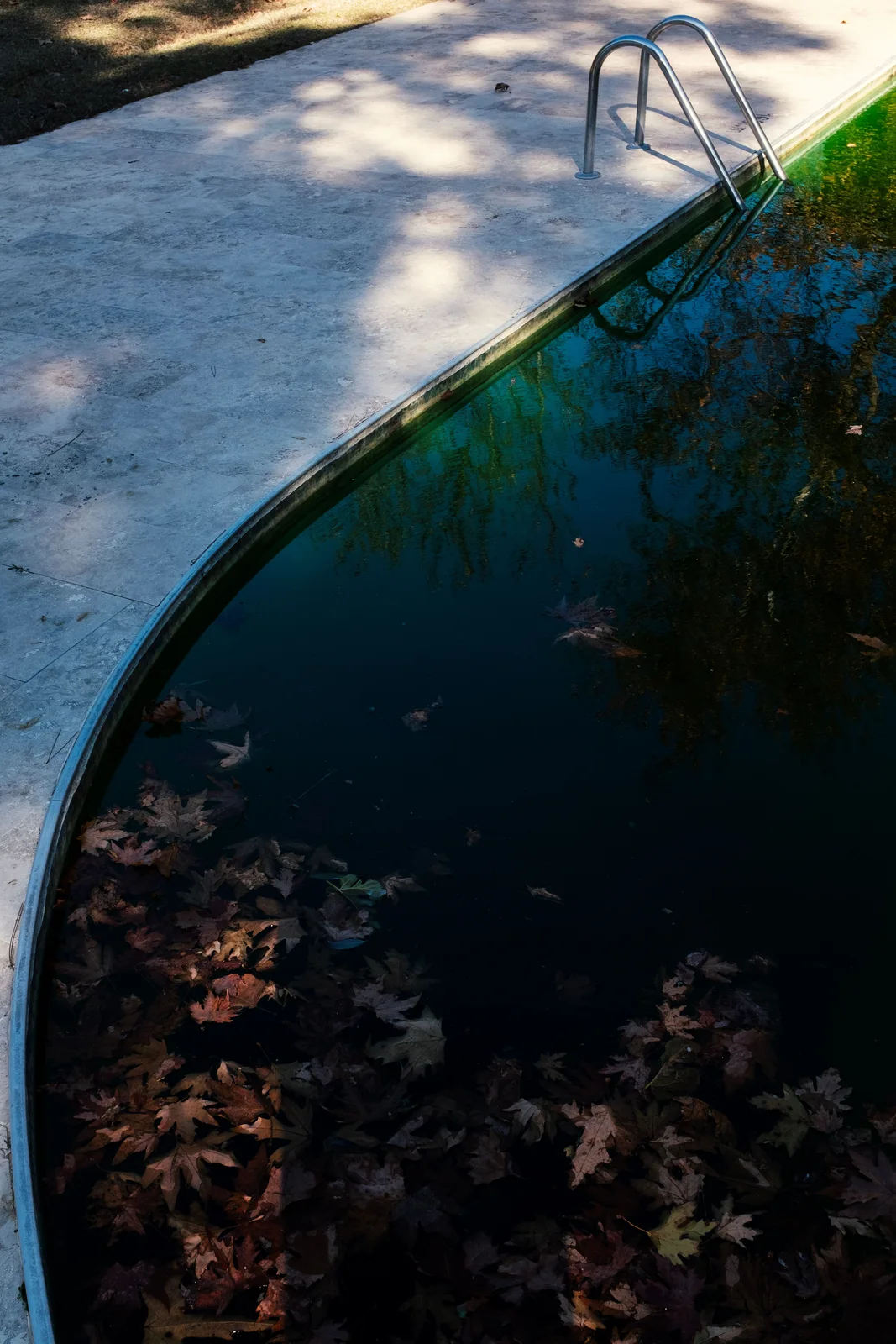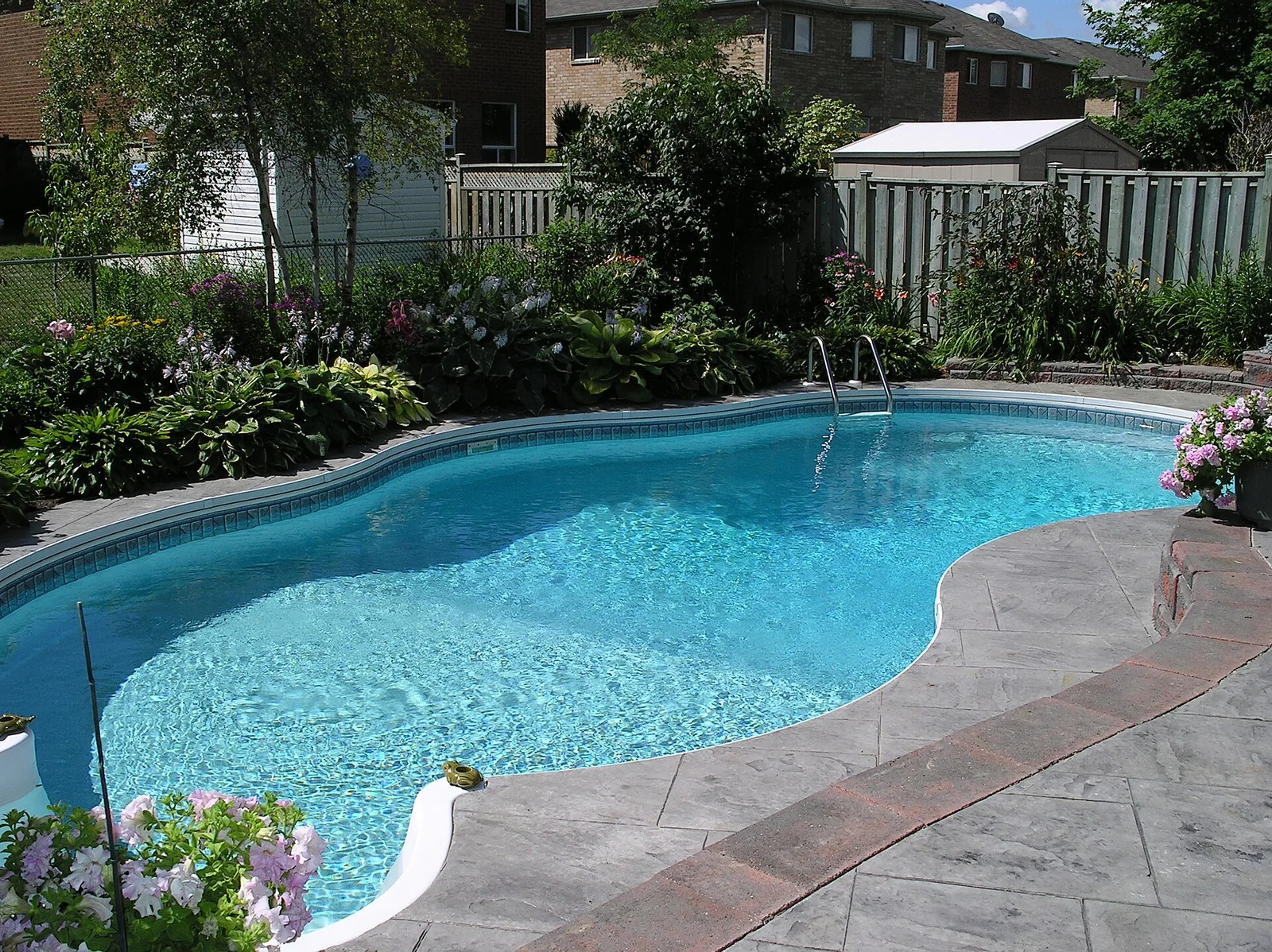
Use water appearance, test results, flow, and filter clues to diagnose cloudy Central Florida pool water safely instead of guessing with chemicals.
Cloudy pool water is a symptom, not a diagnosis. In Central Florida, suspended debris after rain, weak sanitizer, early algae, poor circulation, filter trouble, tiny air bubbles, and mineral precipitation can all hide the floor. Test the water and inspect the circulation system before adding shock, clarifier, or another treatment. If you cannot clearly see the bottom and drains, keep swimmers out until visibility and sanitation are restored.
Key Takeaway
Start with four questions: Is the water gray-white, greenish, or full of bubbles? Is free sanitizer and pH in range? Is water moving normally through the pump, filter, and returns? Did the cloudiness appear after rain, heavy use, a chemical addition, or equipment service?
Those answers separate four broad causes:
- Sanitation: low effective sanitizer or a growing contaminant load.
- Water balance: particles or minerals coming out of solution after chemistry changes.
- Circulation: too little water reaching or returning from the equipment.
- Filtration: suspended material passing through, bypassing, or overwhelming the filter.
Do not choose a dose from appearance alone. Product type, pool volume, current test results, surface, and filter design all matter.
Read the Water Before Treating It
Use daylight and look from several angles. Appearance does not prove a cause, but it tells you which evidence to collect next.
| What you see | More likely explanation | First useful check |
|---|---|---|
| Dull or gray haze after rain or debris | Fine suspended material or sanitizer demand | Full water test, baskets, filter pressure, and return flow |
| Green-tinted haze or slippery surfaces | Early algae growth | Free sanitizer, pH, brushing response, and shaded areas |
| Milky white water after a chemical addition | Precipitated mineral, incompatible treatment, or overdosing | Stop adding products and document everything added |
| Cloud of tiny bubbles that clears in a glass | Air entering or remaining in the circulation system | Pump lid, water level, skimmer behavior, and return jets |
| Powder returning through jets | Damaged or incorrectly assembled filter components | Shut down and inspect the filter according to its manual |
| Haze that returns on the same schedule | Chronic chemistry, run-time, flow, or filter-capacity problem | Compare multiple service records, not one test result |
Cloudiness that looks like early algae deserves the Florida pool algae identification guide. A pump that has lost normal basket fill or return strength belongs in the no-circulation troubleshooting guide. These problems can overlap, but they should not be treated as interchangeable.
Use This Cloudy Pool Diagnostic Order
1. Pause swimming and document the change
If the deepest floor or drain is not clearly visible, do not swim. Reduced visibility can hide a person under the water and makes it harder to assess the pool safely. Photograph the water, note the time, and record rain, heavy use, landscaping work, refilling, service, and every product recently added.
2. Remove the material you can see
Skim leaves, empty skimmer and pump baskets, and vacuum settled debris using a method appropriate for the filter and system. A packed basket or blocked skimmer can reduce flow. Organic material also consumes sanitizer while it breaks down.
Late wet-season storms, fall fronts, oak leaves, pine material, and windblown soil can add a large load in a few hours. If runoff crossed the deck into the pool, correct that water path instead of treating each cloudy episode as chemistry alone. The pool deck drainage guide explains how to separate a blocked drain from grading or runoff problems.
3. Test before you dose
Measure free sanitizer and pH first, then evaluate the other balance factors used for that pool, including total alkalinity, calcium hardness, and stabilizer. The CDC identifies disinfectant and pH as the first defense against swimming-related germs.
A reading that is "normal" on one strip does not clear the entire system. Old reagents, poor sampling, very high sanitizer, and missing balance measurements can hide the real problem. Retest with a reliable method when the water appearance conflicts with the result.
4. Confirm circulation
Look through the pump lid without opening the system. Confirm that the basket is normally filled, the skimmer is drawing without gulping air, and return jets have their usual strength. Compare the filter gauge with the pressure recorded immediately after the filter was last cleaned, because each pool has its own clean baseline.
Shut power off before opening baskets or equipment. Never loosen a filter clamp, lid, gauge, or air-relief assembly while the system is pressurized. Stop if the pump runs dry, the filter leaks, or electrical protection trips.
5. Match filter service to the filter type
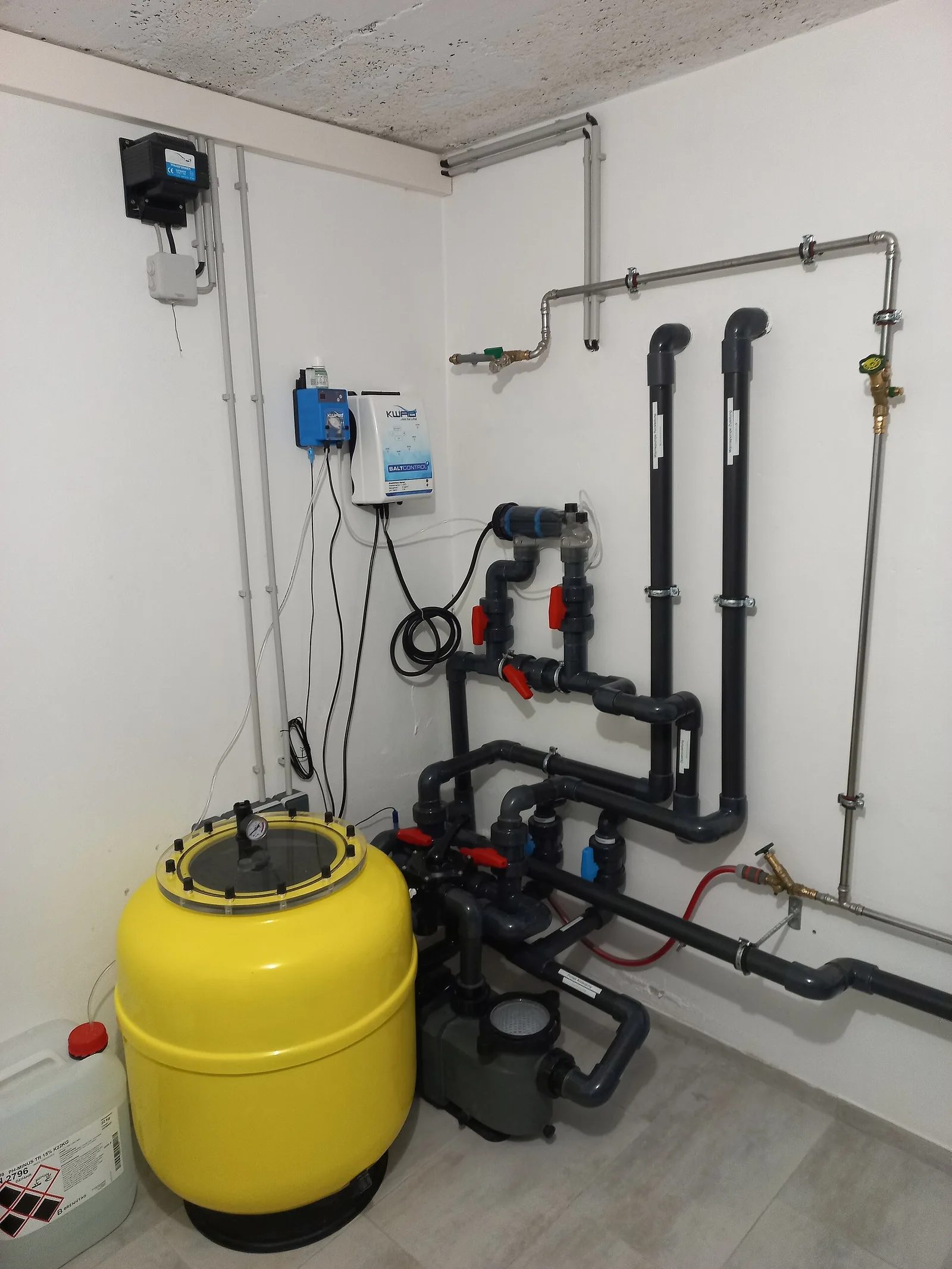
Sand, cartridge, and diatomaceous earth (DE) filters are not cleaned or reassembled the same way. Follow the equipment manual. A dirty filter can restrict flow, but an incorrect valve position, torn cartridge, cracked manifold, displaced grid, missing DE recharge, or internal bypass can send material back to the pool.
The Florida Department of Health operator manual lists damaged filter elements, bypass, air binding, inadequate backwashing, rain, windblown dirt, algae, and improper chemical use among cloudy-water causes. That list is a useful reminder: adding sanitizer cannot repair a torn element, and cleaning a sound filter cannot correct unbalanced water.
Why "Just Shock It" Often Fails
Shock is a treatment category, not a diagnosis. It may be appropriate when measured sanitizer demand or contamination requires oxidation, but it does not fix a suction leak, damaged cartridge, filter bypass, scale-forming balance, or runoff problem.
Repeated blind additions can make the picture harder to read. Some products add calcium or stabilizer. Clarifiers can overload a filter when misused. Flocculants require a compatible system and a specific removal plan. Mixing products or adding them too close together can be hazardous.
The CDC pool-chemical safety guidance says to read the full label, measure carefully, open one container at a time, and never mix chlorine with acid or different pool chemicals. Add only what the label permits, based on current results and known pool volume.
"Clear water comes from sanitation, circulation, and filtration working together. If one part is failing, another bucket of product can hide the evidence without fixing the cause."
- Dave Cole, Cole's Pool Service & More
When Homeowner Maintenance Is Reasonable
A homeowner can usually handle observation, skimming, basket cleaning with power off, brushing with surface-approved equipment, and routine testing. Normal filter cleaning can also be reasonable when the owner knows the model, follows its manual, relieves pressure correctly, and can inspect the parts during reassembly.
Request professional diagnosis when:
- the deepest floor remains obscured after the measured chemistry and normal filtration have been corrected;
- cloudiness returns every few days or after each service visit;
- powder or debris blows back through the return jets;
- the pump repeatedly loses prime or draws visible air;
- filter pressure behaves abnormally compared with the clean baseline;
- the filter tank, clamp, valve, gauge, or internal parts are damaged;
- water turned milky immediately after incompatible or unknown products were added;
- algae returns despite consistent testing, brushing, and circulation;
- the water followed landscape, roof, or flood runoff into the pool.
Cole's Pool Service & More provides weekly pool maintenance in DeBary, Deltona, Orange City, Sanford, Heathrow, Lake Mary, Longwood, and DeLand. When the evidence points to the pump or filter instead of routine care, the company also offers pool equipment repair across its verified Central Florida service area.
Cloudy Pool Water Questions Homeowners Ask
Is it safe to swim in a cloudy pool?
Do not swim when you cannot clearly see the deepest floor and drains. Cloudiness can accompany poor sanitation, and limited visibility creates a separate safety problem even when a single test result appears acceptable.
Why is my pool cloudy after heavy rain?
Rain can carry debris into the water, dilute treatment levels, alter balance, and overwhelm baskets or filters. Test first, remove debris, verify normal flow, and correct only what the results and equipment condition support.
Why is the pool still cloudy after shocking it?
The cause may not be sanitizer demand. Filtration bypass, restricted circulation, mineral precipitation, trapped air, or an incorrect treatment can leave the water cloudy. Record the product and dose, then inspect the system before adding more.
Can a dirty filter make pool water cloudy?
Yes. A loaded filter can reduce flow and capture less material, while damaged or misassembled components can let debris return to the pool. Compare pressure with the clean baseline and follow the model-specific cleaning instructions.
Does cloudy water always mean algae?
No. Early algae is one possibility, especially with low sanitizer, a green tint, or slippery surfaces. Fine soil, pollen, mineral precipitation, tiny air bubbles, and filter failures can produce different kinds of haze.
How long should a cloudy pool take to clear?
There is no reliable universal time. A light debris load with sound equipment may clear after correction and filtration, while algae, filter damage, runoff, or severe water-balance problems take different work. Diagnose the cause and track whether visibility improves instead of promising a fixed number of hours.
Restore the System, Not Just the Appearance
Clear water should be visibly clean, properly sanitized, balanced for the installed surface and equipment, and moving through a functioning filter. Use appearance to guide the inspection, measured results to guide treatment, and equipment evidence to decide whether maintenance or repair is the right next step.
Dave Cole
Dave Cole is the owner of Cole's Pool Service & More, serving pool owners across Central Florida since 2008.
References
- 1.Centers for Disease Control and Prevention. (2025). Guidelines for keeping your pool safe and healthy. https://www.cdc.gov/healthy-swimming/safety/what-you-can-do-to-stay-healthy-in-swimming-pools.html
- 2.Centers for Disease Control and Prevention. (2021). Use pool chemicals safely. https://www.cdc.gov/healthy-swimming/media/pdfs/Pool-Chemical-Safety-USE-poster-p.pdf
- 3.Florida Department of Health in Collier County. (2016). Swimming pool operators' manual. https://collier.floridahealth.gov/programs-and-services/environmental-health/swimming-pools/_documents/2016PoolTechnicianManualEnglish.pdf