Learn why a Central Florida pool light fails, what you can check safely, and when a tripping GFCI or wet fixture needs professional repair.
A pool light that will not turn on is not always a failed fixture. In Central Florida, the cause may be a tripped GFCI after a thunderstorm, an automation or switch problem, a failed transformer, a damaged cord, water inside the fixture, or an expired bulb or LED assembly. Homeowners can check controls and visible conditions from dry ground, but a light that flickers, contains water, creates a tingling sensation, or trips protection needs to stay off until it is professionally evaluated.
Key Takeaway
Treat a pool-light failure as an electrical diagnosis, not a bulb-changing project. Confirm the correct switch, schedule, and GFCI status once. If the GFCI will not reset, trips again when the light is selected, or the fixture shows water or corrosion, shut off the lighting circuit and do not use the pool until a qualified pool professional or electrician has identified the fault.
Start With the Symptom, Not the Fixture
| What you observe | Safe first check | What it can indicate |
|---|---|---|
| One light is dark, but other pool lights work | Correct color program or controller command | Failed lamp, LED module, fixture, cord, or individual connection |
| Every pool and spa light is dark | Breaker, labeled GFCI, timer, automation, and transformer status | Shared power, control, relay, transformer, or protection problem |
| Light flickers or changes color incorrectly | Controller program and whether the symptom repeats | Control sequence, poor connection, failing LED electronics, or moisture |
| GFCI trips as soon as the light turns on | Nothing beyond one documented reset | Ground fault involving the fixture, cord, junction box, transformer, or wiring |
| Water, fogging, or residue appears behind the lens | Turn the light circuit off | Failed seal, cracked lens, corrosion, or damaged fixture |
| Anyone feels tingling in or near the water | Keep everyone out and shut off pool power from a dry location | Possible electrical leakage or bonding problem requiring immediate professional inspection |
This table is for triage, not repair. A dark light and a tripping GFCI do not carry the same risk.
Use This Safe Pool-Light Check Order
Stay dry and do not open the fixture, transformer, junction box, automation panel, or breaker panel. If you cannot identify a control without removing a cover, stop there.
- Keep swimmers out while checking the system. Do not test an uncertain underwater light with anyone in the pool.
- Confirm the intended control. Try the labeled wall switch, app, remote, timer, or automation schedule that normally operates the light. A recent power interruption can change a clock or automation state.
- Check whether one light or every light failed. One dark fixture points toward its individual circuit or assembly. Several lights failing together makes a shared GFCI, controller, relay, or transformer more likely.
- Locate the labeled GFCI from dry ground. Use only its normal TEST and RESET buttons according to its instructions. If it will not reset, resets with the light off but trips when the light turns on, or trips again later, leave it off.
- Observe the lens without entering the water. Look for condensation, a visible water line, discoloration, corrosion, or debris inside the sealed assembly.
- Record the equipment details. Photograph the fixture face, controller display, transformer label, and any fault message. Note whether the failure followed a storm, outage, renovation, or recent service.
Pentair's homeowner guidance starts with confirming power and checking for a tripped GFCI. It then directs multi-light or transformer diagnosis to a licensed pool technician or electrician. That boundary matters because voltage measurements and wiring tests require access to energized electrical components.
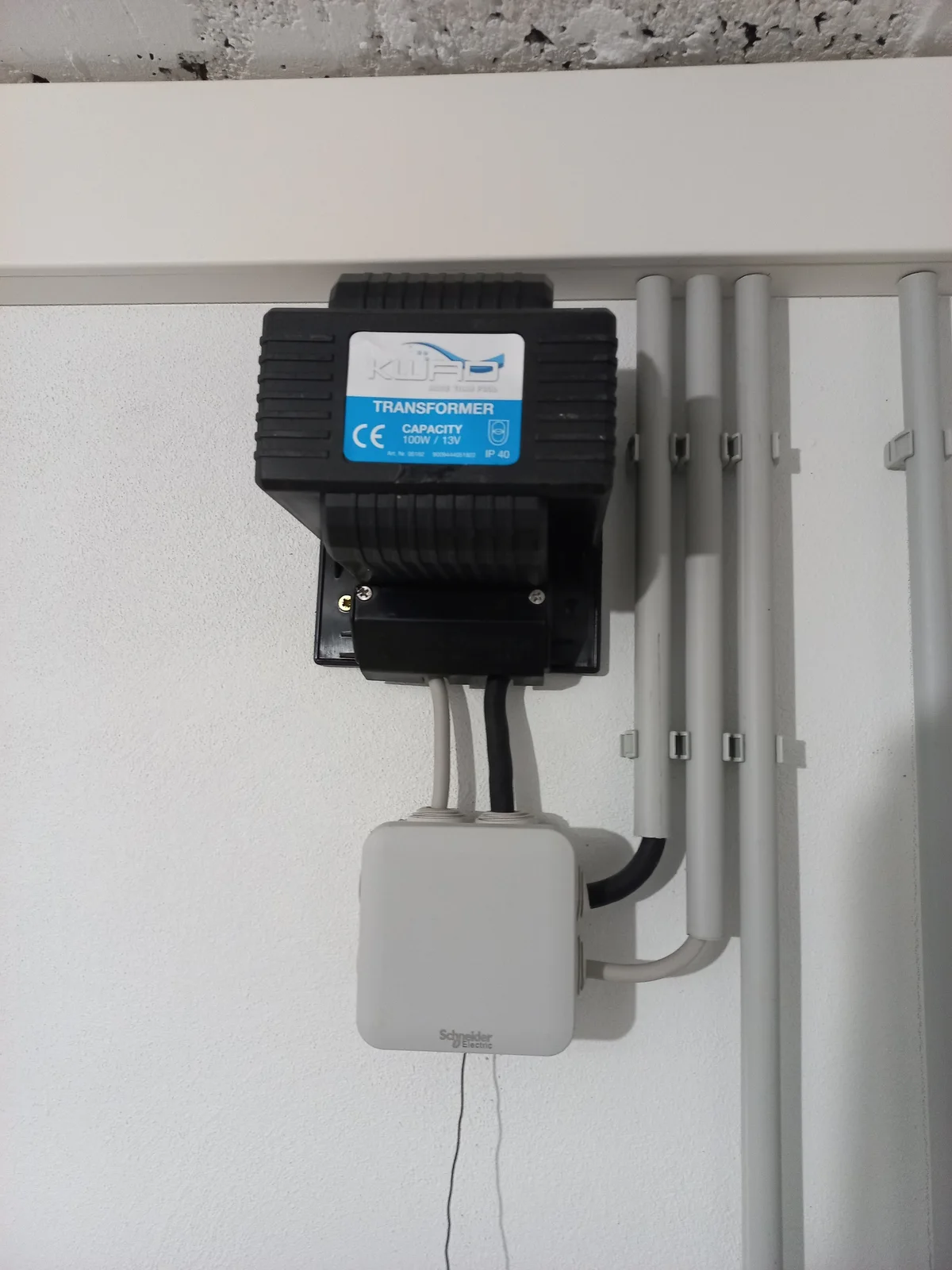
After these checks, Cole's Pool Service & More can diagnose pool lighting and equipment faults in Volusia, Seminole, Orange, and Lake counties. A concise symptom history helps separate a control issue from a fixture, transformer, or wiring problem before parts are selected.
Why Central Florida Weather Exposes Lighting Problems
October remains within the Atlantic hurricane season, and Central Florida electrical systems may have just been through months of thunderstorms, rain, humidity, and power interruptions. Those conditions do not prove that a storm caused the failure, but the timing matters.
- A recent outage can disturb schedules or automation. Check the displayed time and selected lighting program before assuming hardware failed.
- A power disturbance can trip protection. A GFCI reset that holds once is different from one that trips whenever the light is commanded on.
- Moisture can expose a weak seal or connection. Condensation or water behind a lens is a visible stop sign, not something to dry out by repeatedly operating the light.
- Longer fall evenings make intermittent faults easier to notice. Flicker, dim output, or mismatched color may have existed before homeowners began using the lights earlier each evening.
Do not label repeated GFCI operation a nuisance trip. A ground-fault circuit interrupter interrupts current when it detects an unsafe imbalance. Repeated resets do not repair the fault.
GFCI Trips, Water in the Lens, and Other Stop Conditions
The U.S. Consumer Product Safety Commission recommends that underwater-light switches and GFCIs be clearly marked, that permanent GFCIs be tested monthly, and that underwater lights and their junction-box connections be inspected by a qualified electrician. It also identifies growth inside a lens as a possible sign of leakage.
Stop testing and request professional help when:
- the GFCI or breaker will not reset or trips again;
- the light flickers, flashes unexpectedly, or operates intermittently;
- water, condensation, residue, rust, or discoloration is visible inside the lens;
- the fixture face, niche, cord, conduit, junction box, or control appears damaged;
- the problem started after flooding, impact, excavation, deck work, or an electrical storm;
- there is a hot odor, buzzing, arcing, or heat damage near controls;
- anyone feels tingling or a shock near the pool, deck, rail, ladder, or equipment.
For tingling or suspected electrical leakage, keep everyone away from the water and wet surfaces. Shut off pool equipment power only if the disconnect can be reached safely from a dry location, then call emergency services when an injury has occurred and arrange an electrical inspection before the pool is used again.
Bulb, LED Fixture, Transformer, or Controls?
Pool lights are not all built the same. An older fixture may use a replaceable incandescent or halogen lamp behind a lens and gasket. Many LED products use a sealed light engine or complete fixture. Low-voltage lights add a transformer between the household supply and the light, while automation may add relays, controllers, or programmed color sequences.

The installed model determines whether a lamp, gasket, LED engine, cord, or whole fixture is serviceable. It also determines the required voltage, transformer compatibility, control method, niche fit, and approved replacement parts. The Pentair IntelliBrite manual requires power to be disconnected before installation or service and specifies GFCI connections for its 120-volt and 12-volt pool and spa lights.
Do not order a replacement from the fixture's diameter or color alone. Record the manufacturer, model, voltage, niche type, cord length, controller, transformer rating, and number of lights on the circuit. A compatible diagnosis prevents a working transformer or controller from being discarded and avoids installing a light that does not match the existing system.
What Homeowners Can Handle and What Requires a Professional
Homeowners can document the symptom, verify external controls, check schedules, identify whether one or all lights failed, operate a labeled GFCI once according to its instructions, and inspect the lens from the deck.
Professional work begins when diagnosis requires opening electrical enclosures, testing voltage, removing the underwater fixture, pulling a cord through conduit, evaluating the niche or junction box, verifying grounding and bonding, or choosing replacement equipment. A pool professional may handle fixture and system-specific service, while a licensed electrician should handle electrical work that falls outside the pool contractor's scope.
If other equipment also stopped after an outage, compare the symptoms with the common pool equipment warning signs. If the pump runs but the pool has little or no return flow, use the separate pool circulation troubleshooting guide.
Pool Light Questions Central Florida Homeowners Ask
Why will my pool light not turn on?
The cause can be a control or schedule setting, a tripped GFCI, a failed relay or transformer, a bad connection, a damaged cord, or a failed bulb, LED module, or fixture. Check the external controls and whether other lights work, then stop before opening electrical equipment.
Why does the GFCI trip when I turn on the pool light?
A trip can indicate current leaking from the intended circuit through a wet fixture, damaged cord, connection, transformer, or other component. Do not keep resetting the GFCI. Leave the light off and have the circuit diagnosed.
Can I change a pool light without draining the pool?
Some wet-niche fixtures are designed to be released and brought onto the deck while the pool remains full, but that does not make the work a safe universal DIY task. The fixture type, cord, niche, seal, voltage, and electrical condition must be identified first.
Is condensation inside a pool light normal?
No visible moisture behind a sealed underwater lens should be ignored. Turn the lighting circuit off and arrange an inspection because a gasket, lens, housing, or other seal may have failed.
Why did all my pool lights stop working at once?
Simultaneous failure often points toward something shared, such as the GFCI, transformer, controller, relay, power supply, or automation schedule. A technician should test that shared path before assuming every fixture failed.
Can I replace an old pool light with LED?
Often, but compatibility is specific to the existing niche, voltage, transformer, controller, cord path, and listed equipment. Have those details verified before buying a retrofit or complete LED fixture.
Restore Safe Lighting Before the Next Evening Swim
A dark pool is inconvenient, but a pool light that trips protection, flickers, or contains water is a safety issue first. Document the behavior, leave repeat faults off, and choose a repair based on the installed system rather than guessing at a bulb or fixture.
Dave Cole
Dave Cole is the owner of Cole's Pool Service & More, serving pool owners across Central Florida since 2008.
References
- 1.U.S. Consumer Product Safety Commission. (2019). Ways to protect yourself and others from shock or electrocution in and around pools, hot tubs and spas. https://www.cpsc.gov/s3fs-public/WaysToProtectYourselfAndOthersFromShockOrElectrocutionuUpdated07312019.pdf
- 2.Pentair. (2022). IntelliBrite 5G white and color pool and spa lights installation and user's guide. https://www.pentair.com/content/dam/extranet/nam/pentair-pool/residential/lighting/intellibrite/manuals/intellibrite-5g-white-color-pool-spa-lights-manual-english-french.pdf
- 3.Pentair. (2024). What do I do if my pool or spa lights are not turning on when connected to a light switch? https://proplus.pentair.com/article/What-do-I-do-if-my-light-is-not-turning-on-when-connecting-to-a-light-switch