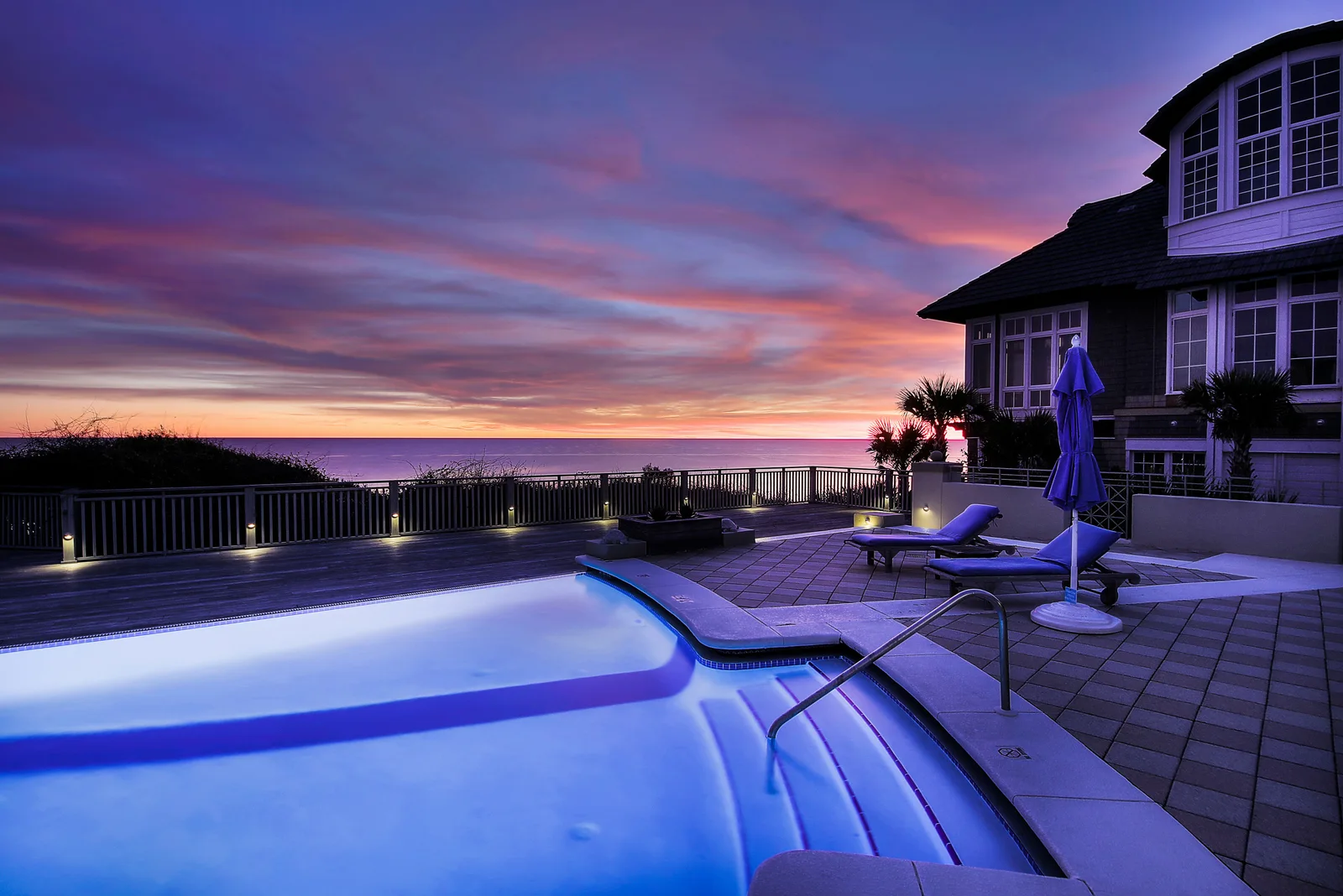
Plan a smarter pool renovation by bundling surface, tile, coping, equipment, lighting, and safety upgrades before work begins.
A pool renovation in Central Florida should not start with color samples. It should start with a scope inspection. Once the pool is drained, tile is disturbed, coping is removed, or the deck edge is opened, every hidden problem becomes cheaper to fix before the new finish goes on. The homeowners who plan the whole renovation up front usually avoid the most expensive mistake: paying for a beautiful surface, then cutting back into it six months later for plumbing, lighting, equipment, or deck work that should have been included the first time.
Start With the Shell, Not the Finish Color
The interior finish is the part everyone sees, but it is not the first thing I inspect. A renovation has to start with the pool shell, the waterline, the deck edge, and the equipment pad. If those areas are weak, a new finish only hides the problem for a short time.
Before choosing plaster, quartz, or pebble, the pool should be checked for:
- Structural cracks: any crack that keeps reopening, branches in multiple directions, or runs through the shell needs diagnosis before resurfacing. Hairline shrinkage cracks are different from movement cracks. Movement cracks can come back through a new finish.
- Hollow or loose tile: waterline tile that sounds hollow when tapped usually means the bond has failed. New plaster against failing tile is not a complete renovation.
- Coping movement: loose coping stones, separated mortar joints, and raised corners show that the edge system is shifting. That movement can damage the new waterline finish.
- Deck drainage: water should move away from the pool, not back toward the shell. In Florida storms, poor deck drainage can put dirty runoff straight into a freshly renovated pool.
- Staining and etching patterns: surface damage tells the story of past chemistry, metals, organic debris, or aggressive water. The pattern matters because the same cause can damage the new finish.
A good renovation estimate should separate cosmetic items from corrective items. Cosmetic work improves appearance. Corrective work protects the new investment.
Bundle Tile, Coping, and Resurfacing Together
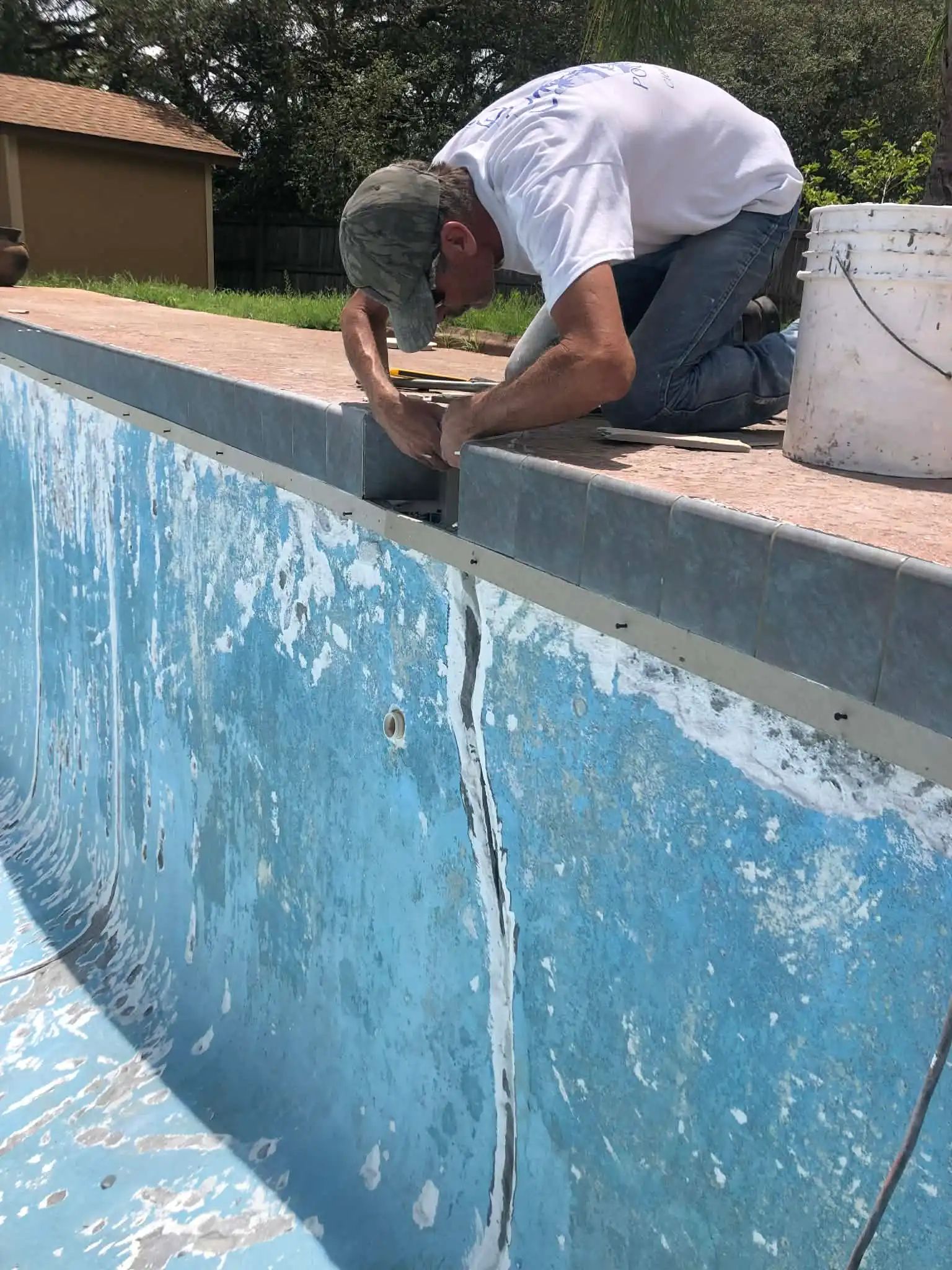
Most Central Florida pool owners wait too long to replace waterline tile and coping. They try to save money by doing only the surface, then realize the old tile makes the new finish look unfinished. Worse, failing tile can shed grout and mineral buildup back into the pool after the renovation is complete.
When the pool is already drained, bundling these items is usually more efficient:
- Waterline tile replacement: tile is easiest to remove and reset before the new interior finish is applied. It also gives the renovation a clean visual line.
- Coping repair or replacement: coping defines the edge of the pool and protects the bond beam. Loose coping should be corrected before new surface material is installed below it.
- Skimmer throat and tile line repairs: skimmer openings often reveal cracks, missing grout, or rough transitions. Fixing them during the renovation prevents leaks and staining around the waterline.
- Deck edge transitions: the joint where deck meets coping should be inspected and sealed correctly. Florida rain finds weak joints fast.
If the budget is tight, I would rather see a homeowner choose a practical finish and correct the waterline system than spend all the money on a premium finish while leaving loose tile and coping in place. The finish is only as good as the edge around it.
Use the Renovation to Fix Equipment Problems
Equipment upgrades are often the smartest part of a pool renovation because the system is already being evaluated. A pool that looks new but runs on an undersized pump, leaking valves, weak filtration, or old lighting is not finished. It is just dressed up.
During a renovation, the equipment pad should be checked for:
- Pump age and efficiency: single-speed pumps can cost far more to operate than modern variable-speed options. The U.S. Department of Energy notes that efficient pool pumps and proper operation can reduce energy use when the pump is correctly sized and programmed.
- Filter condition: cartridge, sand, and DE filters all have different service needs. If the filter is undersized or overloaded, the new surface will still fight cloudy water.
- Valve layout: old valves, cracked handles, and confusing plumbing make future service harder. Renovation is a good time to simplify and label the system.
- Heater or heat pump readiness: if heating is planned later, the plumbing and electrical layout should be considered now. Waiting can mean cutting or reworking fresh pad plumbing.
- Automation and timers: better scheduling helps control pump run time, lighting, and sanitation. This matters in Central Florida because pools operate year-round.
Equipment does not have to be replaced just because the pool is being resurfaced. It does need to be inspected honestly. If a pump is near failure, a light niche is leaking, or the filter is already undersized, pushing that repair past renovation usually costs more.
Do Not Ignore Drains, Returns, Lights, and Fittings
A drained pool is the best time to inspect everything that penetrates the shell. These small parts are easy to overlook because they do not look expensive on their own. They become expensive when they fail after the new finish is installed.
The renovation checklist should include:
- Main drain covers, including condition, fit, and current safety compliance
- Return fittings, eyeballs, wall fittings, and threaded collars
- Light niches, conduit seals, lenses, gaskets, and bonding condition
- Skimmer condition, throat cracks, weir doors, baskets, and lids
- Vacuum ports, cleaner lines, and unused penetrations
- Step jets, spa jets, spillways, and water feature fittings
Florida Department of Health pool guidance keeps suction safety, water quality, and operational condition front and center for public pools. Residential pools are not inspected the same way, but the renovation logic is the same: if a fitting is old, cracked, loose, or unsafe, the time to correct it is while the pool is empty and accessible.
This is also the time to talk through lighting. LED upgrades are often much easier during renovation because the pool is drained, the fixture is accessible, and the finish crew can address the niche area cleanly. If a homeowner wants a modern nighttime pool, lighting should be part of the renovation scope from day one.
"A renovation is not just a prettier pool. It is your best chance to correct the systems that will decide whether that pool stays easy to own for the next ten years."
- Dave Cole, Cole's Pool Service & More
Plan for Florida Weather and Cure Time
Renovation scheduling in Central Florida has to respect weather. Afternoon storms, high humidity, extreme heat, and hurricane season all affect the job. A surface crew can work fast, but the pool still needs proper prep, application, refill, and startup chemistry.
Homeowners should plan for these timing realities:
- Drain and prep time: most renovations need at least one full day for draining, chipping, grinding, and shell preparation. Larger pools or pools with heavy delamination take longer.
- Finish application: plaster, quartz, and pebble finishes are usually applied in a single coordinated window. Weather interruptions matter because the material has to be worked correctly.
- Immediate refill: once the new finish is applied, the pool should be filled without stopping. Stopping the waterline during refill can leave a permanent line on a new surface.
- Startup chemistry: the first 28 days are critical for plaster-based finishes. Brushing, pH control, alkalinity management, and calcium balance protect the surface while it cures.
- Storm planning: heavy rain during startup changes water balance fast. A renovation schedule should include a plan for testing and adjusting after storms.
The best renovation crews explain the startup plan before the pool is drained. If nobody is responsible for brushing and chemistry during the first month, the new finish is at risk before the homeowner has even had a chance to enjoy it.
Know Which Permits and Safety Items Apply
Not every cosmetic pool renovation requires the same permit path, but homeowners should never assume a project is permit-free just because the shell already exists. Scope determines requirements. Electrical changes, structural changes, deck changes, pool barrier changes, and major equipment changes can trigger different review needs depending on the city or county.
In Central Florida, the renovation conversation should include:
- Barrier and access safety: gates, doors, alarms, fencing, and screen enclosure access should be reviewed when work changes the pool area.
- Electrical bonding and lighting: any electrical work around the pool must be handled correctly. Water, metal, and electricity leave no room for shortcuts.
- Deck or hardscape changes: changing deck elevations, drainage, or access points can affect code and safety.
- Drain and suction safety: drain covers and suction fittings should be current, secure, and appropriate for the system.
- Local inspection requirements: Volusia, Seminole, Orange, and Lake County projects can differ by municipality. A contractor should identify those requirements before work starts.
The Florida Building Code, Residential contains residential pool safety requirements that matter when the pool area is being altered. A homeowner does not need to memorize code language, but the contractor should understand how the renovation affects barriers, alarms, access, electrical work, and drainage.
Build the Renovation Scope in the Right Order
The cleanest pool renovation scope follows a logical order. When that order is skipped, the project becomes harder to price and easier to delay.
Use this order before signing:
- Inspect the shell, tile, coping, deck edge, and equipment pad. Document what is cosmetic and what is corrective.
- Decide what must be fixed before the new finish. Cracks, loose tile, failing coping, and bad fittings come before color selection.
- Choose the finish based on ownership timeline. Plaster, quartz, and pebble each make sense for different budgets and time horizons.
- Finalize equipment changes. Pump, filter, valves, lights, automation, and heater plans should be decided before work begins.
- Confirm permit and safety requirements. Do this before scheduling, not after demolition starts.
- Schedule startup care. The first month after filling should have a written brushing and chemistry plan.
This order prevents the most common renovation problem I see: a homeowner gets a resurfacing number, approves it, then discovers that the pool also needs tile work, a light repair, coping repair, and equipment changes. The number was never real because the scope was never complete.
What a Finished Renovation Should Deliver
A finished renovation should give the homeowner three things: a better-looking pool, a more reliable system, and a clear maintenance path. If the project only delivers the first one, it is incomplete.
The final walkthrough should include:
- Surface review: check finish consistency, steps, benches, corners, and the tile line.
- Equipment review: confirm pump operation, filter pressure, valves, lights, and any automation settings.
- Startup instructions: define brushing frequency, chemical targets, and when normal swimming can resume.
- Care expectations: explain what the homeowner should watch during the first 30 days.
- Warranty documentation: provide finish, equipment, and workmanship information in writing.
Pool renovation is one of the best investments a Florida homeowner can make when the work is planned correctly. The goal is not to make the pool look good for the first week. The goal is to make it easier to own for the next decade.
Dave Cole
Dave Cole founded Cole's Pool Service & More in 2008 after completing his military service. Based in Central Florida, he holds Florida state contractor licensing and has personally overseen several hundred pool builds, renovations, repairs, and long-term maintenance accounts across Volusia, Seminole, Orange, and Lake counties. His writing draws directly from what he encounters in the field every week.
References
- 1.Florida Department of Health. (2026). Public swimming pools. Healthy Environments. https://www.floridahealth.gov/healthy-environments/swimming-pools/index.html
- 2.Florida Building Commission. (2023). Florida Building Code, Residential, 8th Edition. https://codes.iccsafe.org/content/FLRC2023P1
- 3.U.S. Department of Energy. (n.d.). Choosing, installing, and operating an efficient swimming pool pump. https://www.energy.gov/energysaver/articles/installing-and-operating-efficient-swimming-pool-pump