Thinking about a backyard putting green in Central Florida? Learn how turf, drainage, base prep, cups, and maintenance affect long-term results.
We have installed more backyard putting greens in the last two years than in the previous five combined. The reasons are consistent: homeowners finishing their pool decks ask about filling the remaining yard space, golfers who play Daytona Beach area courses want a way to practice at home, and the cost of synthetic turf has dropped enough that a quality green no longer requires a course-level budget. What surprises most of them is how different building a putting green in Central Florida is from building one anywhere else in the country. The climate determines almost every decision, and getting those decisions wrong produces a green that is either dangerous to use in July or dead within a year.
Why Florida's Climate Makes Synthetic Turf the Right Choice
Natural bentgrass, the traditional surface used on professional putting greens, cannot survive the Florida summer. Bentgrass is a cool-season grass maintained at a cut height between one-eighth and three-sixteenths of an inch. It requires daily mowing, aggressive fungicide programs, and temperatures that drop below 85 degrees at night to recover from heat stress. During a Central Florida summer, overnight lows stay above 75 degrees for four to five months straight, and daytime soil temperatures along with intense UV exposure push bentgrass into sustained decline. University of Florida extension specialists rate bentgrass as unsuitable for Central Florida without a dedicated cooling and irrigation system, which on a residential scale adds $15,000 to $30,000 to the project before turf is ever laid.
Bermuda grass hybrids like TifEagle and Champion are used on professional Florida courses because they tolerate the heat, but they require reel mowing to a cut height of 0.1 to 0.125 inches multiple times per week and respond poorly to the shade cast by surrounding fences, tree canopies, and pool screen enclosures. The maintenance overhead is simply not realistic for a residential homeowner.
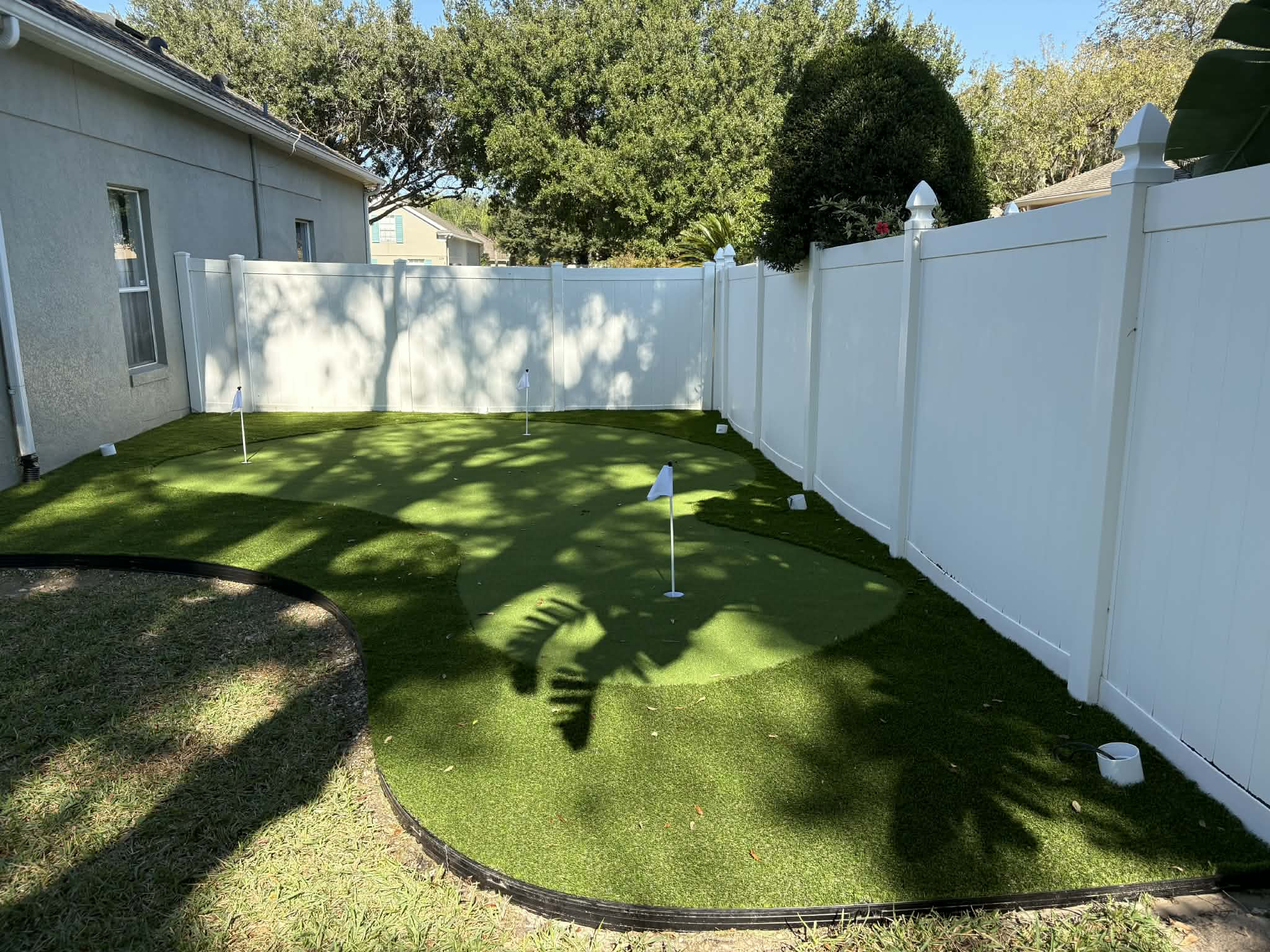
Synthetic turf eliminates those variables entirely. A properly installed synthetic putting surface uses turf specifically engineered for putting performance: consistent pile height, adequate ball roll speed (typically a Stimpmeter rating of 9 to 11 for residential greens), and materials rated for 15 or more years of Florida UV exposure. The surface does not need mowing, irrigation, or fertilization, and it performs identically on a Tuesday morning in January and a Saturday afternoon in August.
What a Professional Putting Green Installation Includes
The surface you walk on is the visible part. The work that determines whether the green performs well and lasts is almost entirely below it.
A proper installation starts with excavation to a depth of 4 to 6 inches. The subgrade is graded to produce the desired contours and slopes, then compacted. Florida's sandy soil drains well by default, but a drainage layer of crushed aggregate of 3 to 4 inch depth is installed over the compacted subgrade to prevent any localized ponding during heavy rain events. Central Florida averages 50 to 54 inches of rainfall per year, with intense convective rain in the June through September window, so drainage is not optional.
Over the aggregate base goes a layer of compacted decomposed granite, which is the substrate that holds the turf's shape precisely. This is where the green's contours, breaks, and undulations are finalized. Once the granite layer is set and compacted, the synthetic turf is laid, stretched, and cut to the green's perimeter. The edges are secured with nails, staples, or adhesive depending on whether the green borders a pool deck, patio paver, or landscape border.
The final step is infill application. Crumb rubber was the standard infill for years, but for putting greens most contractors now use silica sand or a sand-rubber blend. Infill weight determines how firmly the turf pile is held upright, which directly affects ball roll consistency. An underfilled green plays slow and inconsistently.
A typical residential installation in Volusia, Seminole, Orange, or Lake County takes two to four days from excavation to final brushing, weather permitting.
Pairing Your Putting Green with Pool Deck and Patio Hardscape
A putting green almost always works better as part of a larger hardscape plan than as a standalone installation. The green needs defined borders that separate turf from deck, grass, or planting beds. Without a border treatment, edge fibers fray over time and the transition looks rough.
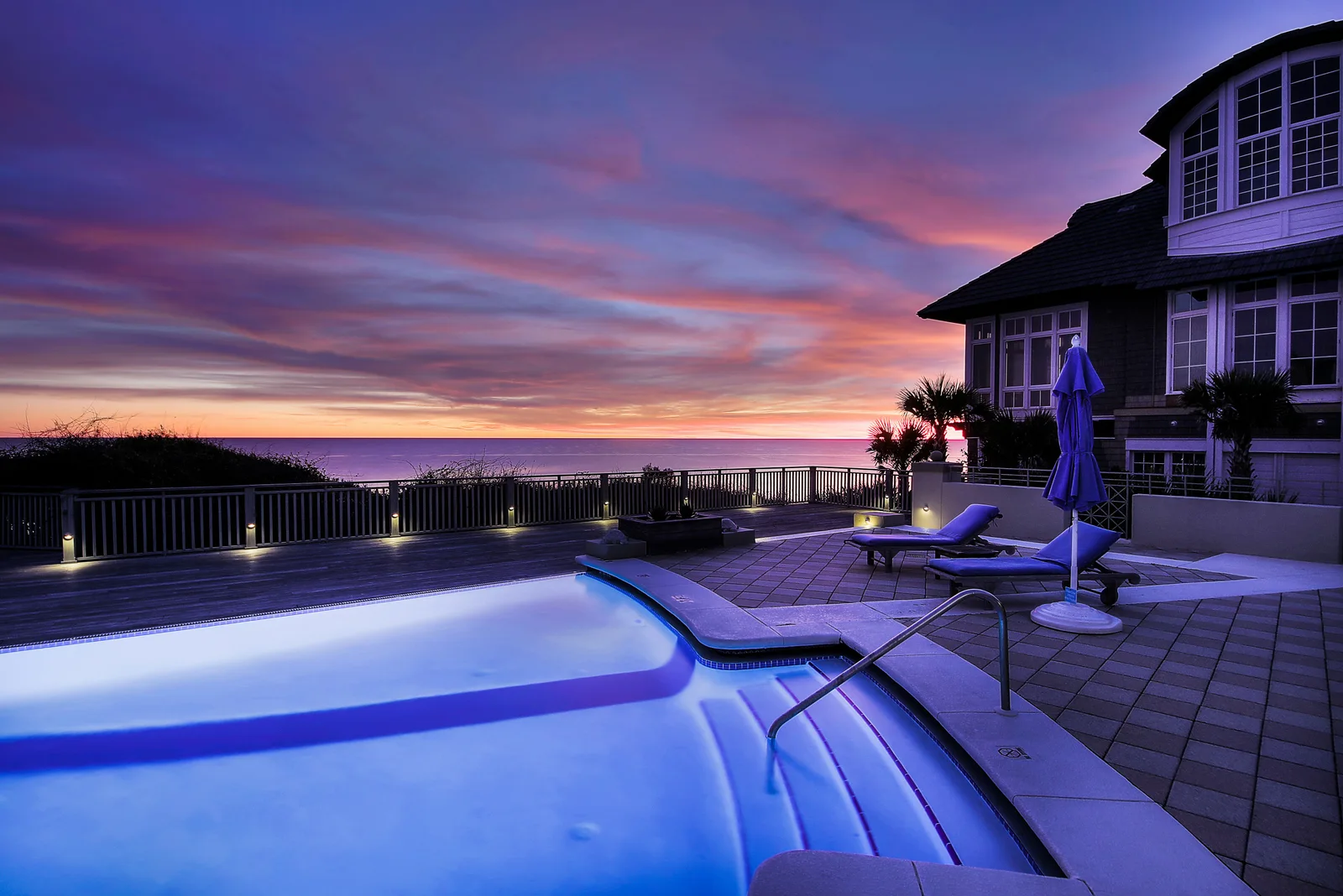
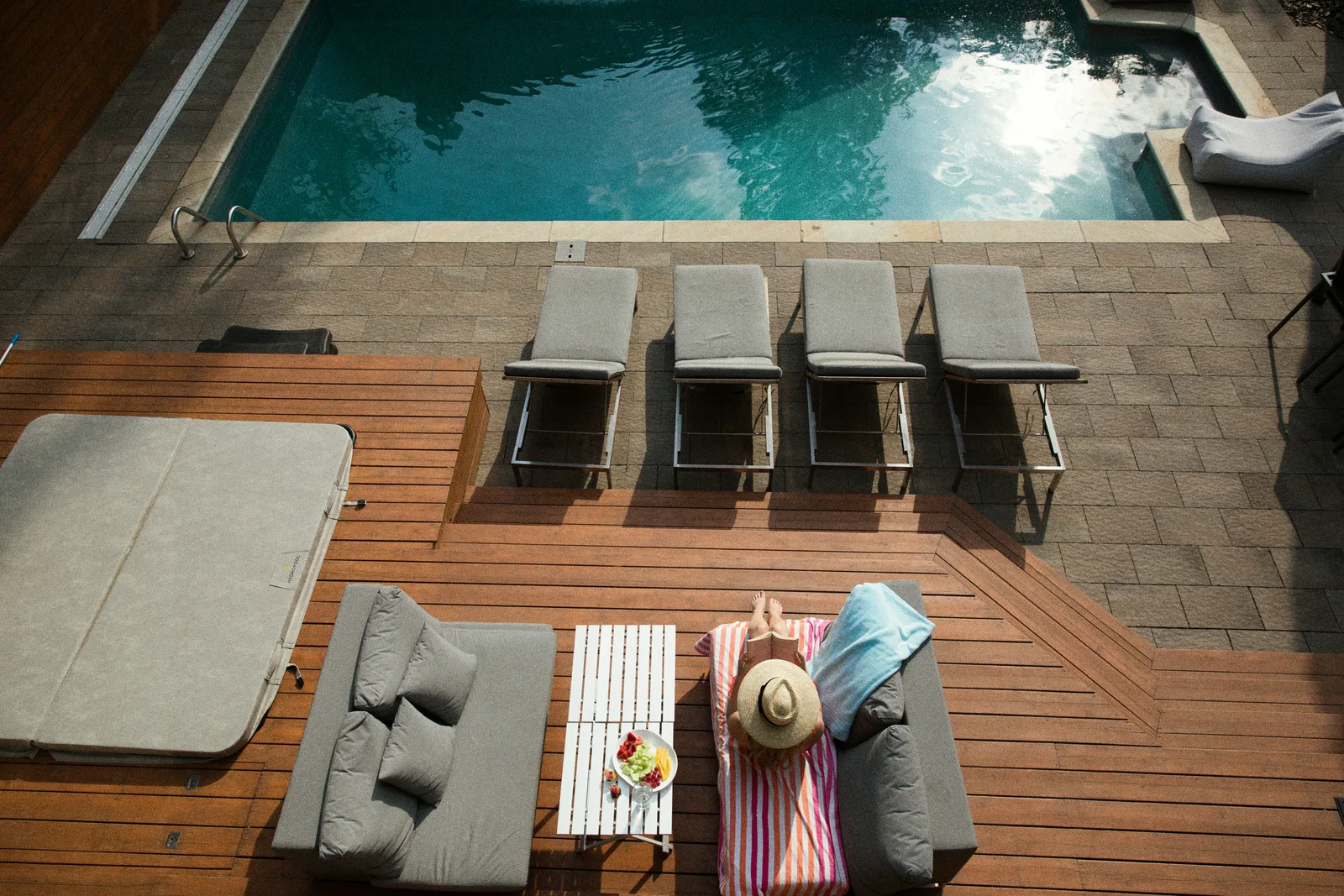
Concrete, travertine, and porcelain pavers all integrate cleanly with synthetic turf using a routed channel or a raised border course. When a pool and putting green are designed together, the deck layout can account for the green's footprint from the start, which eliminates the awkward transitions that result from retrofit additions.
A chipping mat or practice bunker can be added adjacent to the putting surface. Bunkers in Florida require the same drainage consideration as the green itself: French drains or aggregate sub-layers prevent sand from becoming waterlogged during heavy rain. The fringe area around the green, typically 2 to 4 feet of shorter-pile turf, improves ball playability and adds a finished look that separates well-built greens from basic ones.
"A putting green that is built right in Florida will still look and play the same ten years from now. One that cuts corners on the base or drainage will look tired in two. The material cost difference between doing it right and doing it cheap is usually less than ten percent of the total project. The outcome difference is not close."
- Dave Cole, Cole's Pool Service & More
Questions to Ask Before You Commit to a Contractor
Not every hardscape contractor builds putting greens, and not every company that installs synthetic turf understands putting surface performance. Before signing anything, get specific answers to these:
- What is the turf's Stimpmeter rating? A legitimate contractor can tell you. Residential greens should land between 9 and 11. Anything labeled "putting green turf" without a speed rating is a marketing description, not a performance specification.
- What base depth are you using? Minimum 4 inches of compacted aggregate below the decomposed granite layer is standard for Florida's rainfall load. Anything thinner is a shortcut.
- How is the perimeter secured? Nails and staples are standard. Ask how they handle the edge where turf meets concrete or pavers, because that joint is where most installation failures start.
- What is the warranty? Quality synthetic putting turf carries a 10- to 15-year UV and performance warranty from the manufacturer. Make sure the contractor is authorized to warranty that product.
- Have they built greens here specifically? Ask for Central Florida references and photos. Putting green installation techniques used in dry climates do not account for Florida's drainage demands.
Dave Cole
Dave Cole founded Cole's Pool Service & More in 2008 after completing his military service. Based in Central Florida, he holds Florida state contractor licensing and has personally overseen several hundred pool builds, renovations, repairs, and long-term maintenance accounts across Volusia, Seminole, Orange, and Lake counties. His writing draws directly from what he encounters in the field every week.
References
- 1.Synthetic Turf Council. (2024). Synthetic Turf Performance Guidelines. Synthetic Turf Council. https://www.syntheticturfcouncil.org/
- 2.University of Florida IFAS Extension. (2023). Turfgrass Management for Golf Courses in Florida. UF/IFAS. https://edis.ifas.ufl.edu/
- 3.Florida Department of Agriculture and Consumer Services. (2024). Landscape Contractor Licensing. FDACS. https://www.fdacs.gov/