Compare Florida pool screen enclosure frame, mesh, repair, and maintenance choices so your outdoor space stays cleaner and easier to use.
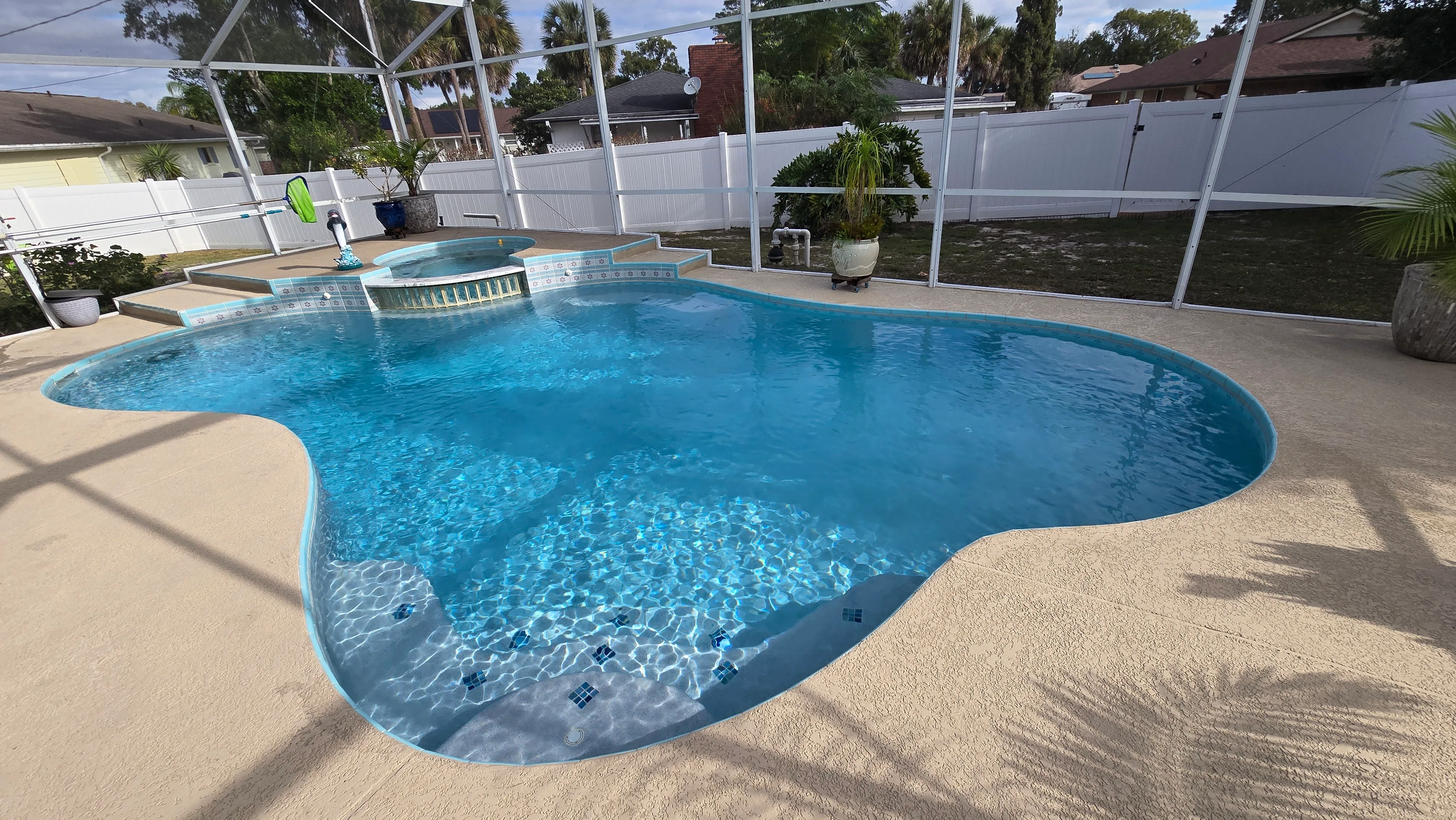
Florida homeowners who add screen enclosures to their pools typically find that the structure changes how they use the pool more than they expected. The daily friction of brushing debris off the water before swimming, tolerating evening mosquito activity, and watching leaf blowers undo your maintenance work all decrease with an enclosure in place. Those practical changes translate into measurable chemistry benefits as well: an enclosed pool receives less organic debris, loses less chlorine to direct UV, and requires fewer chemical adjustments per season than an uncovered pool operated in the same yard.
What the Enclosure Actually Protects Against
The primary function of a pool screen enclosure in Florida is debris exclusion and insect control, not sun protection. Pine needles, oak leaves, seed pods, and organic material from Central Florida's heavy afternoon thunderstorms introduce phosphates and organic load that consume chlorine and feed algae. An enclosure does not eliminate this input entirely, but it reduces it substantially enough that enclosed pools consistently require less chemical product and less labor to maintain at equivalent water quality.

Frame Material and Gauge Options
Standard residential enclosures in Florida use 6000-series aluminum alloy framing. Aluminum does not rust and handles the wet, humid environment better than steel or wood. The practical distinction homeowners choose between is wall thickness. Heavier-gauge aluminum extrusions cost more upfront and handle wind loads better over the long term. Lighter-gauge framing meets Florida Building Code minimums but has less margin when a storm pushes the structure beyond its design load. The cost difference between standard and heavy-gauge framing is typically modest relative to the total project cost.
Mesh Grades and Their Trade-offs
Screen mesh is graded by weave density, measured in openings per square inch. Standard 18x14 mesh excludes insects and large debris but allows fine pollen and small particles to pass through. 20x20 mesh blocks a higher percentage of pollen and provides a modest reduction in UV transmission. The denser weave also reduces airflow, trading better solar control for less natural ventilation inside the enclosure. Choosing between mesh grades is a real trade-off between air circulation and debris exclusion that depends on how and when the pool is primarily used.
The Maintenance That Determines Actual Lifespan
- Rinse mesh and frame with a garden hose every 4 to 6 weeks to prevent dirt and mildew from accumulating in the weave and degrading the fiber coating
- Inspect all frame connection screws annually and replace any that show stripping, corrosion, or backing out - loose connections allow racking under wind load
- Check the base trim where the enclosure meets the concrete deck each season; separation here is an entry point for water and a leverage point for wind
- Patch any mesh tear larger than a quarter inch within one season; small tears grow quickly through wet-dry cycles and put additional load on adjacent panels
- Apply UV-protectant spray to mesh panels on south and west faces of the enclosure, which receive the highest cumulative UV exposure and typically degrade first
"An enclosure that gets hose-rinsed twice a month and has its screws checked once a year will outlast one that never gets touched by five to seven years, with no other difference in materials or installation quality."
- Dave Cole, Cole's Pool Service & More
Florida Building Code Requirements
Pool screen enclosures in Florida are regulated structures that require permits and inspections. The Florida Building Code specifies wind load requirements based on the local wind speed design zone, and enclosures must be engineered to meet those loads. Unpermitted enclosures create complications at the point of property sale and may not be covered by homeowner insurance in the event of storm damage. Any enclosure installation or re-frame should begin with a permit application, regardless of the scope of the work.
Dave Cole
Dave Cole founded Cole's Pool Service & More in 2008 after completing his military service. Based in Central Florida, he holds Florida state contractor licensing and has personally overseen several hundred pool builds, renovations, repairs, and long-term maintenance accounts across Volusia, Seminole, Orange, and Lake counties. His writing draws directly from what he encounters in the field every week.
References
- 1.Florida Building Commission. (2023). Florida Building Code, Chapter 36: Aluminum Structures. https://floridabuilding.org/
- 2.Federal Alliance for Safe Homes. (2024). Hurricane Protection for Your Home. https://flash.org/
- 3.Aluminum Association of Florida. (2023). Screen Enclosure Design and Installation Guidelines. https://www.aluminum.org/