Learn which Florida pool repairs are safe to handle yourself, which mistakes get expensive fast, and when to call Cole's Pool Service & More.
Florida homeowners attempt pool repairs more often than homeowners anywhere else in the country, simply because Florida pools run year-round and problems accumulate faster. Most small repairs are genuinely manageable without professional help. The issue is that the line between a safe DIY job and one that requires licensed expertise is not always obvious, and crossing it in the wrong direction costs three to five times more than calling a pro at the start would have. After 18 years of repair calls in Central Florida, the same mistakes show up on a predictable rotation.
Patching a Plaster Crack Without Diagnosing What Caused It
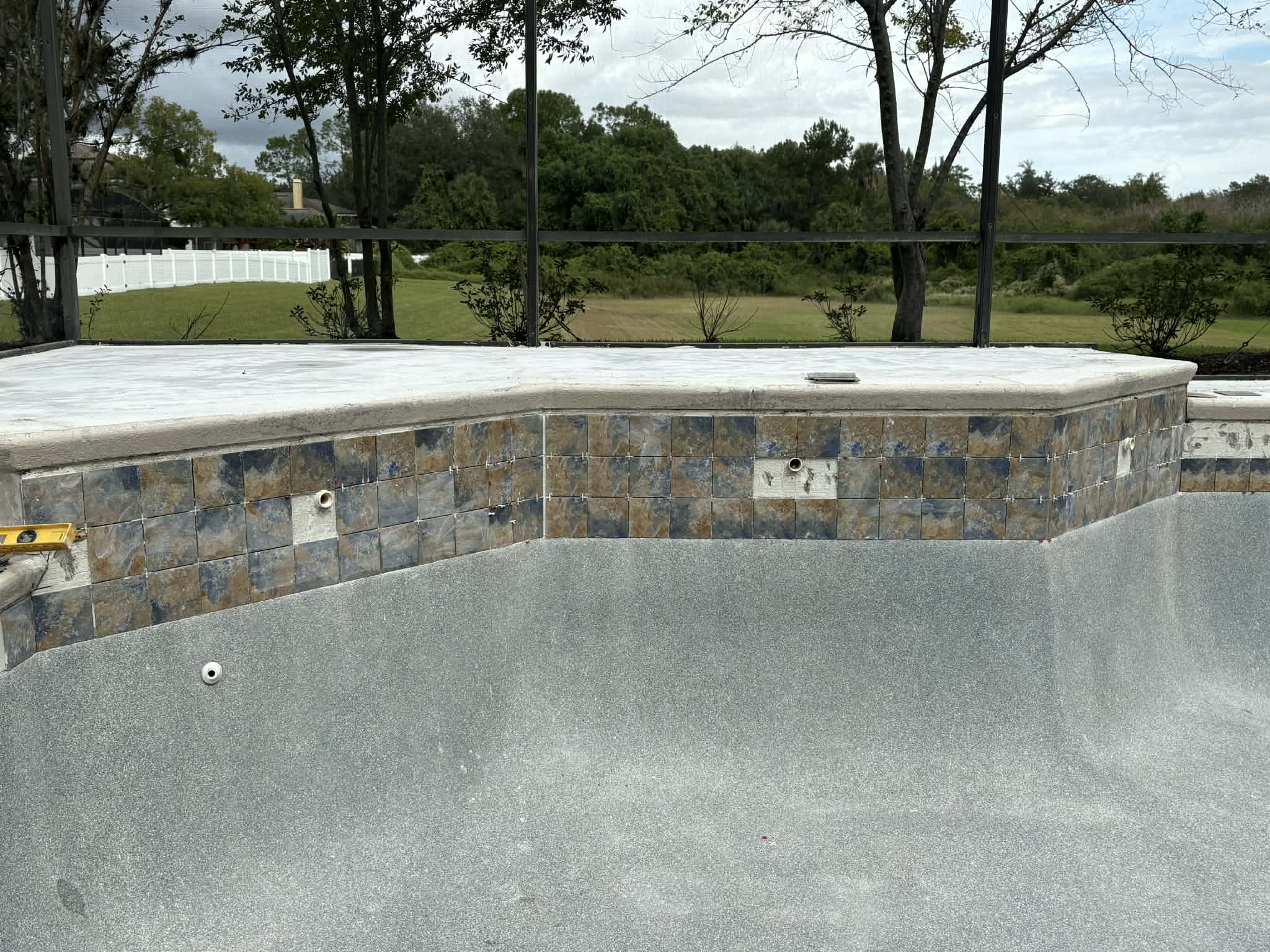
Surface cracks in plaster are common in Florida pools. They develop from settling, chemical imbalance over time, and thermal movement. A homeowner who spots a hairline crack, picks up a hydraulic cement product at the hardware store, and fills it on a dry afternoon has addressed the symptom. Whether they have addressed the problem depends entirely on what caused the crack.
Cracks that follow grout lines between tiles are usually surface-level and respond well to patching. Cracks that run diagonally across the plaster floor, branch into a pattern, or are accompanied by a measurable drop in water level are a different category entirely. A pool losing more than a quarter inch of water per day beyond normal evaporation likely has a structural crack that reaches the shell, and filling the surface opening changes nothing about the water path below. Homeowners who patch these spend money on materials and then spend significantly more when they eventually call a contractor after the patch fails.
The correct first step before any plaster repair is a bucket evaporation test over 24 hours to determine whether actual water loss exists. If loss is confirmed, a leak detection inspection needs to happen before any crack repair, not after.
Over-Shocking a Pool to Fix Chemistry Problems
Shock treatments are one of the most misused tools in DIY pool maintenance. When water turns green, the instinct is to add more shock. When algae comes back the following week, the response is to add even more. This cycle does not work, and it creates secondary problems that were not present before.
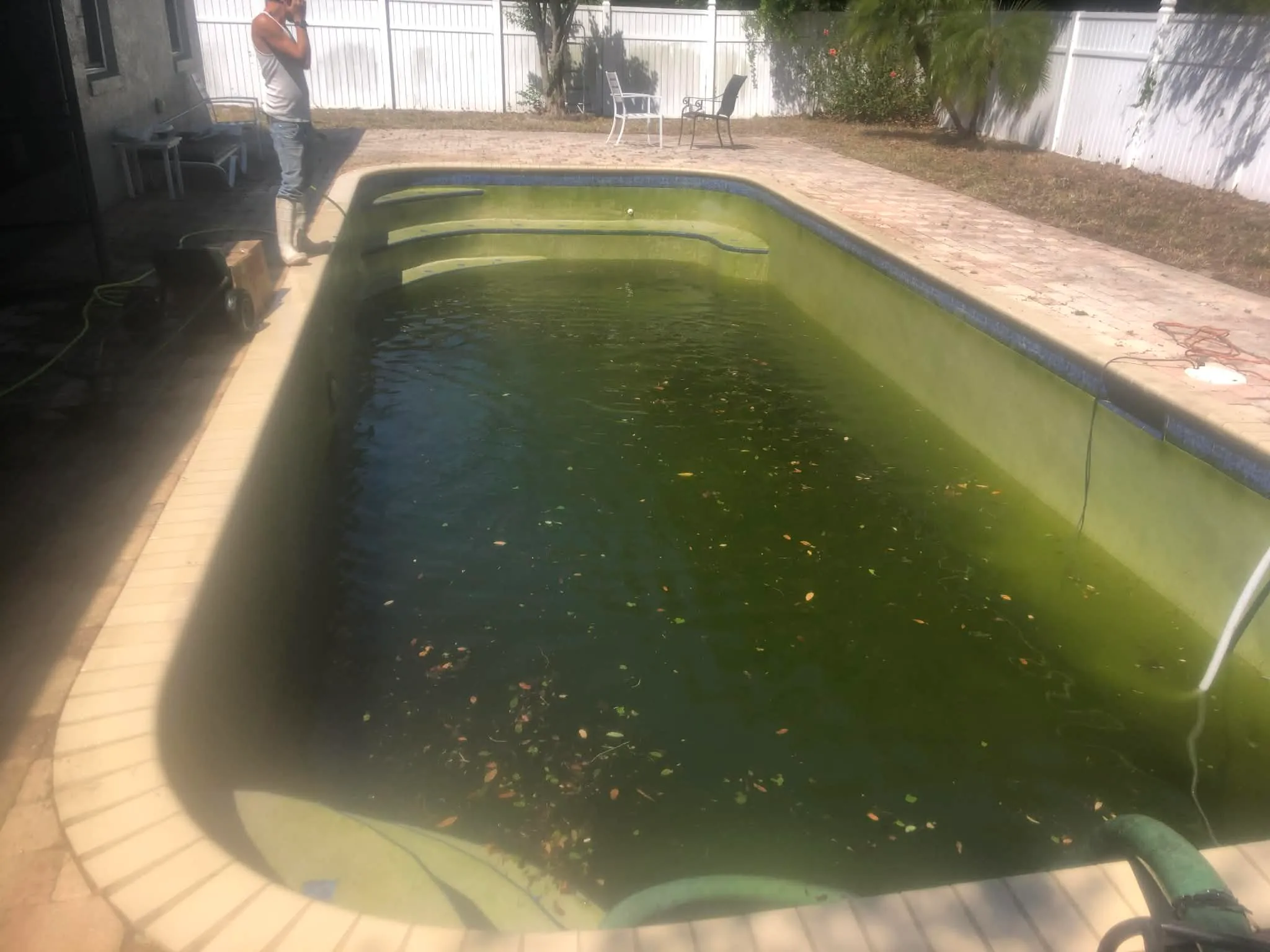
Calcium hypochlorite shock, applied in excess to a Florida pool, raises combined chlorine and pH simultaneously. High pH makes whatever free chlorine is in the water substantially less effective, which is why the algae keeps coming back despite high shock doses. The repeated large shock doses also bleach vinyl liners prematurely and, in gunite pools, accelerate plaster erosion by driving the water into aggressive chemistry ranges. What started as a $40 algae problem can end as a liner replacement or a plaster resurfacing job.
Algae that returns within a week of shocking is almost always a circulation problem or a pH/alkalinity problem, not a chlorine-dose problem. Adding more shock without addressing the root cause extends the damage window.
The Repairs That Are Not DIY Jobs Regardless of Skill Level
Some repairs fall outside what a homeowner should attempt not because they are technically difficult, but because Florida law, physical safety, or the structure of the system makes them inappropriate without licensing or proper equipment.
- Any suction-side plumbing work near the main drain. Florida pools are required under the Virginia Graeme Baker Pool and Spa Safety Act to have compliant anti-entrapment drain covers. Disturbing suction-side plumbing, cracking a main drain cover while attempting a nearby repair, or replacing drain covers with non-compliant hardware creates a documented entrapment hazard. This is a licensed contractor job.
- Electrical repairs at the equipment pad or underwater lighting. Pool electrical systems operate in a wet environment and are subject to GFCI requirements, bonding requirements, and specific conduit burial depths under the National Electrical Code. A miswired pump motor or a compromised bonding grid creates an electrocution risk in and around the water. This is a licensed electrician job.
- Heater gas line connections. Natural gas and propane connections to pool heaters require a licensed plumber in Florida. Incorrect connections create fire and CO hazards. The cost of a licensed plumber for this work is $150 to $250 in most cases. It is not a repair to skip.
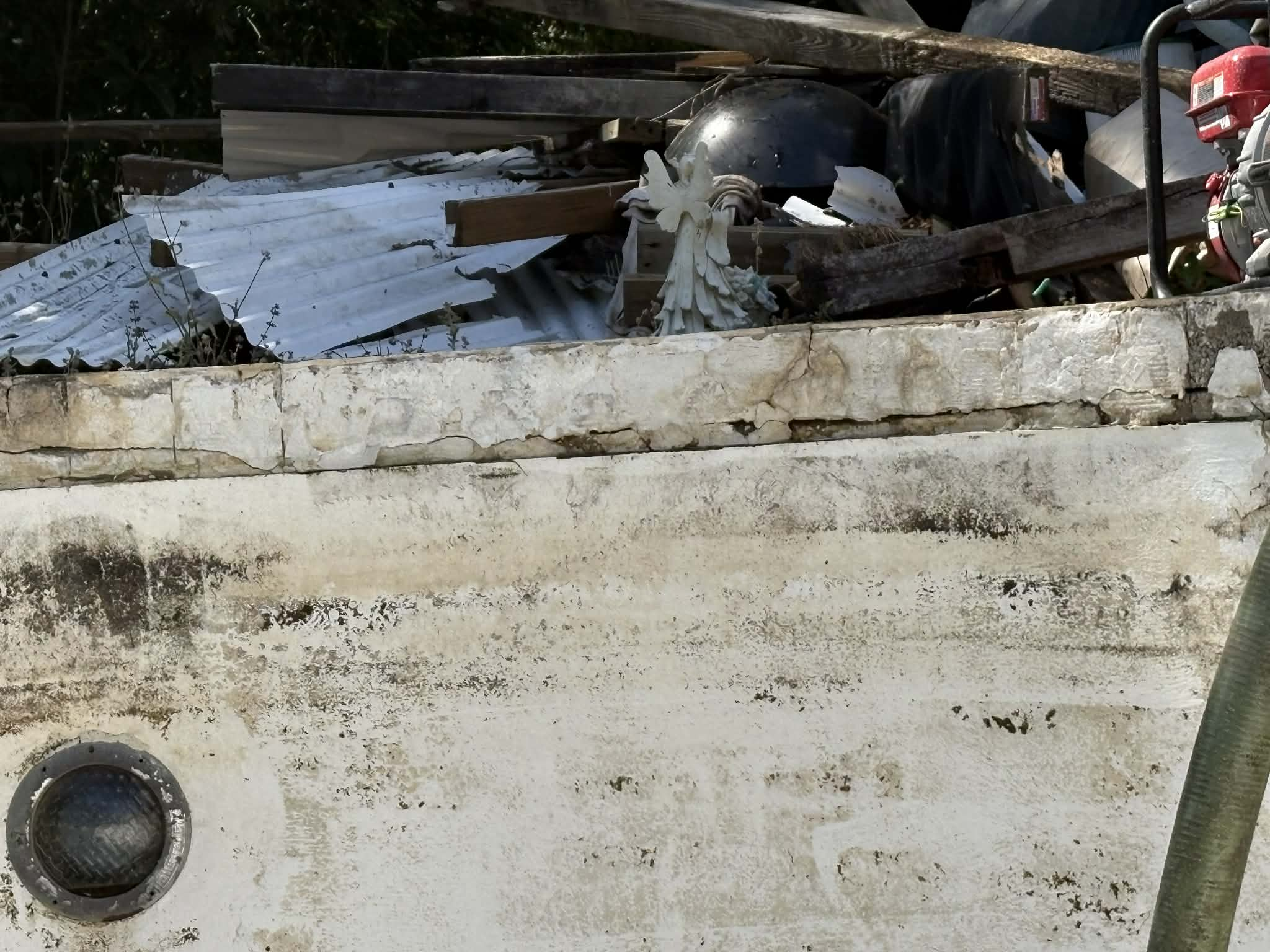
- Gunite or shotcrete structural repairs. Mixing and applying gunite correctly requires equipment that homeowners do not have and surface preparation that takes experience to execute properly. DIY concrete patches on structural cracks fail within one to two seasons in Florida's wet environment and leave the underlying problem fully intact.
- Variable speed pump programming for new plumbing configurations. Incorrectly programmed VS pumps running at insufficient RPM for a given head pressure can cavitate, overheat, and fail within months. The warranty does not cover damage from operator programming errors.
Replacing Equipment Parts Before Diagnosing the Failure Mode
A pump that is not priming gets a new basket, then a new lid O-ring, then a new impeller, and then a service call where the actual problem turns out to be a cracked skimmer line that was drawing air the entire time. This sequence is expensive and entirely avoidable.
The Florida heat accelerates the tendency to rush. A pool that has been off for two days in July with no circulation is growing algae in real time, and that urgency pushes homeowners toward parts replacement before diagnosis. The correct sequence is to identify where air is entering the suction side before replacing any hardware. This takes 20 minutes with a bucket of water and a systematic check of unions, lid O-rings, skimmer bodies, and suction-line fittings. Every part replaced before this step that turns out not to be the cause is money removed from the repair budget that could have gone toward the actual fix.
"I have seen homeowners spend $400 in parts and two weekends of frustration on a problem that would have taken 45 minutes and one union O-ring to fix if they had started by finding the air leak instead of replacing things."
- Dave Cole, Cole's Pool Service & More
When the DIY Line Clearly Belongs to the Homeowner
To be direct: there are pool repairs that homeowners handle correctly every day without professional help. Replacing a pump basket, swapping a pressure gauge, changing a filter cartridge, adjusting a multiport valve position, replacing a broken skimmer weir, and reprogramming a basic timer are all within reach for someone willing to read the equipment manual. Water chemistry management, including adjusting pH, alkalinity, calcium hardness, and stabilizer levels, is also fully a homeowner task once the parameters and their relationships are understood.
The dividing line is not complexity in the mechanical sense. It is whether the repair touches the electrical system, the structural shell, suction-side components near the main drain, or gas connections. Those four categories require professional involvement every time. Everything outside them is a judgment call based on comfort level with basic plumbing and the willingness to diagnose before replacing.
Dave Cole
Dave Cole founded Cole's Pool Service & More in 2008 after completing his military service. Based in Central Florida, he holds Florida state contractor licensing and has personally overseen several hundred pool builds, renovations, repairs, and long-term maintenance accounts across Volusia, Seminole, Orange, and Lake counties. His writing draws directly from what he encounters in the field every week.
References
- 1.Florida Department of Business & Professional Regulation. (2024). Contractor Licensing Requirements: Swimming Pool Contractors. State of Florida. https://www.myfloridalicense.com/intentions2.asp?chBoard=true&boardid=39
- 2.National Swimming Pool Foundation. (2024). Certified Pool Operator Handbook (8th ed.). https://www.nspf.org/
- 3.Association of Pool & Spa Professionals. (2023). ANSI/APSP-7 American National Standard for Suction Entrapment Avoidance. https://www.apsp.org/
- 4.U.S. Consumer Product Safety Commission. (2023). Pool and Spa Safety: Electrical Hazards. https://www.cpsc.gov/Safety-Education/Safety-Education-Centers/Pool-Safely