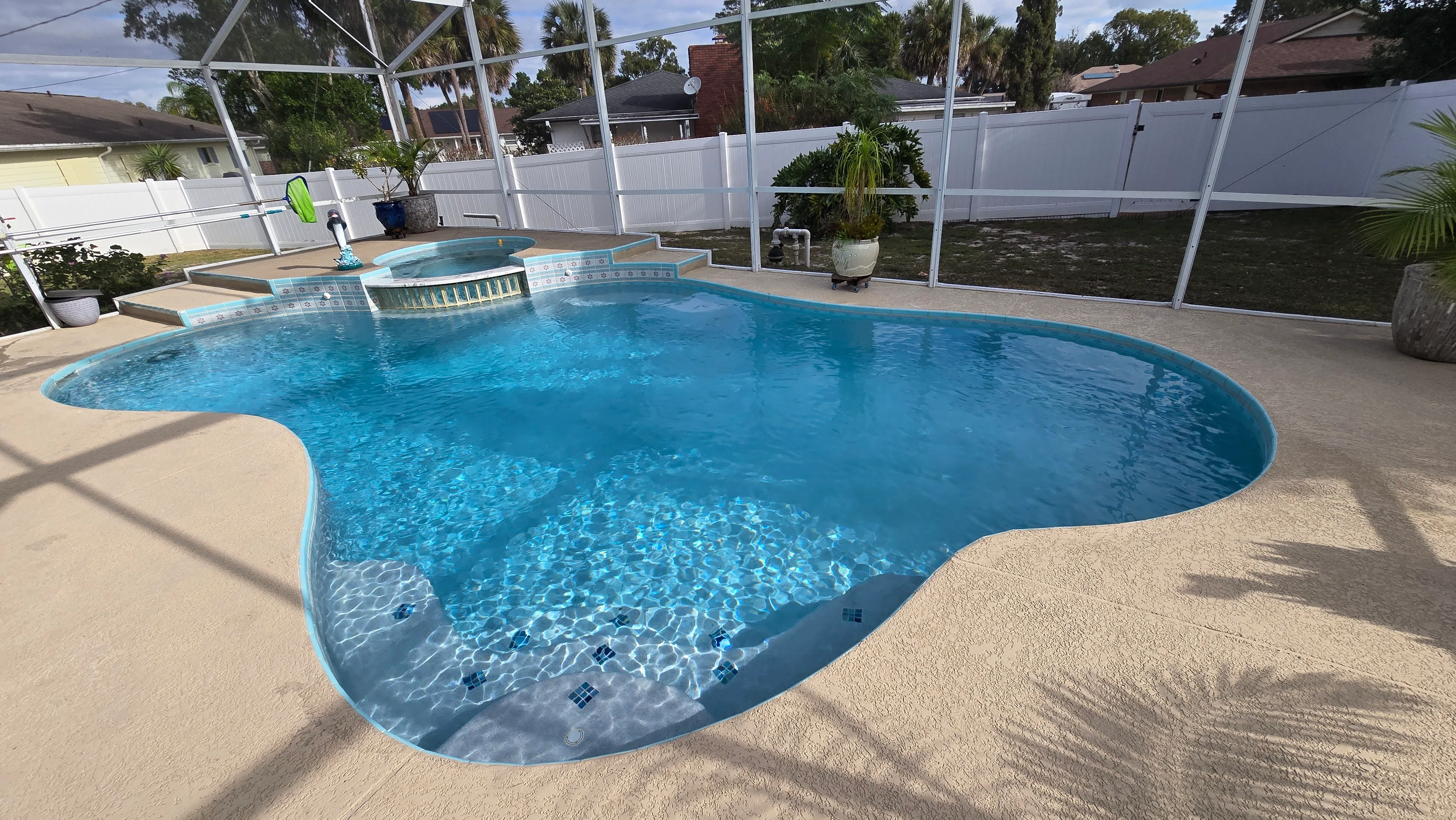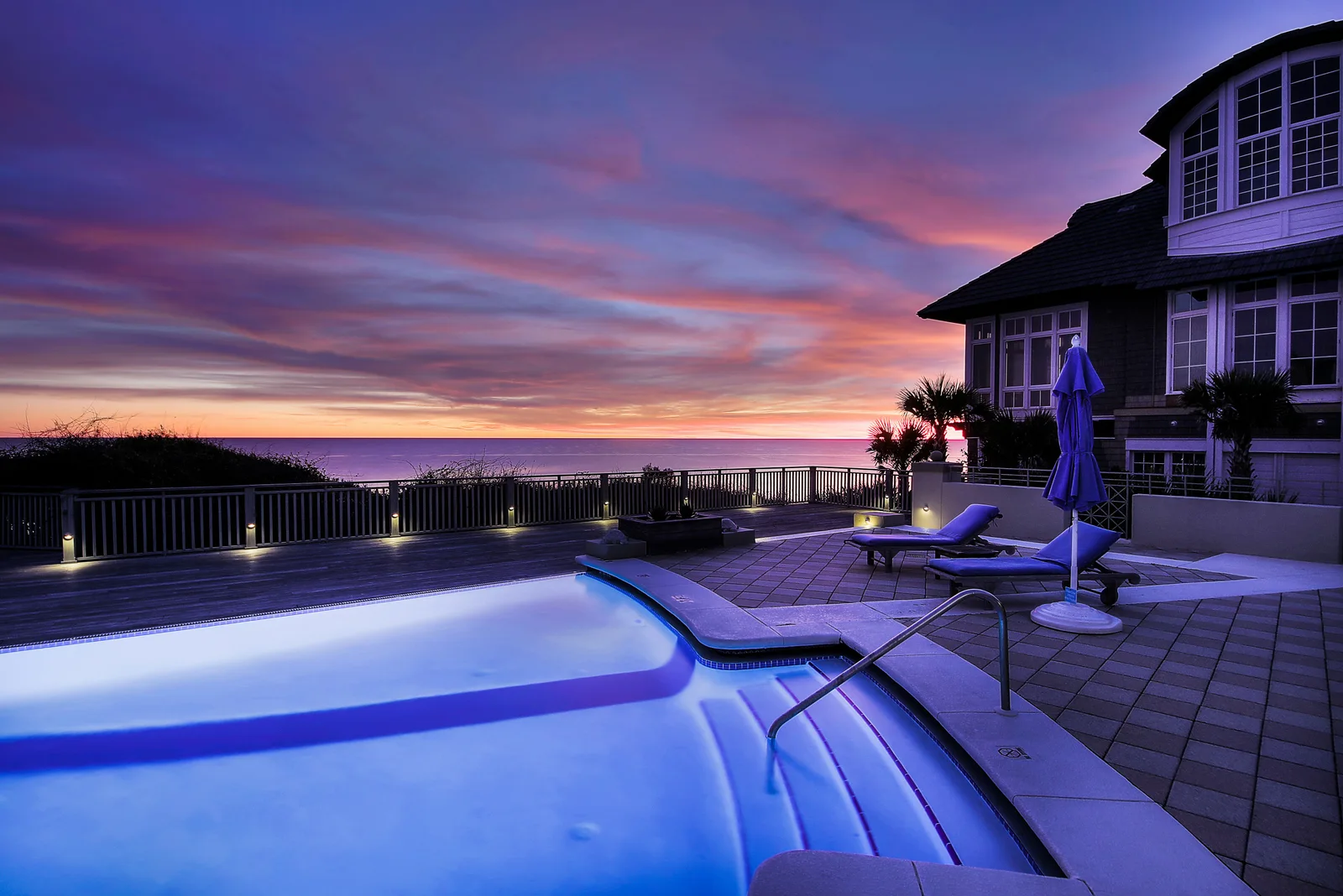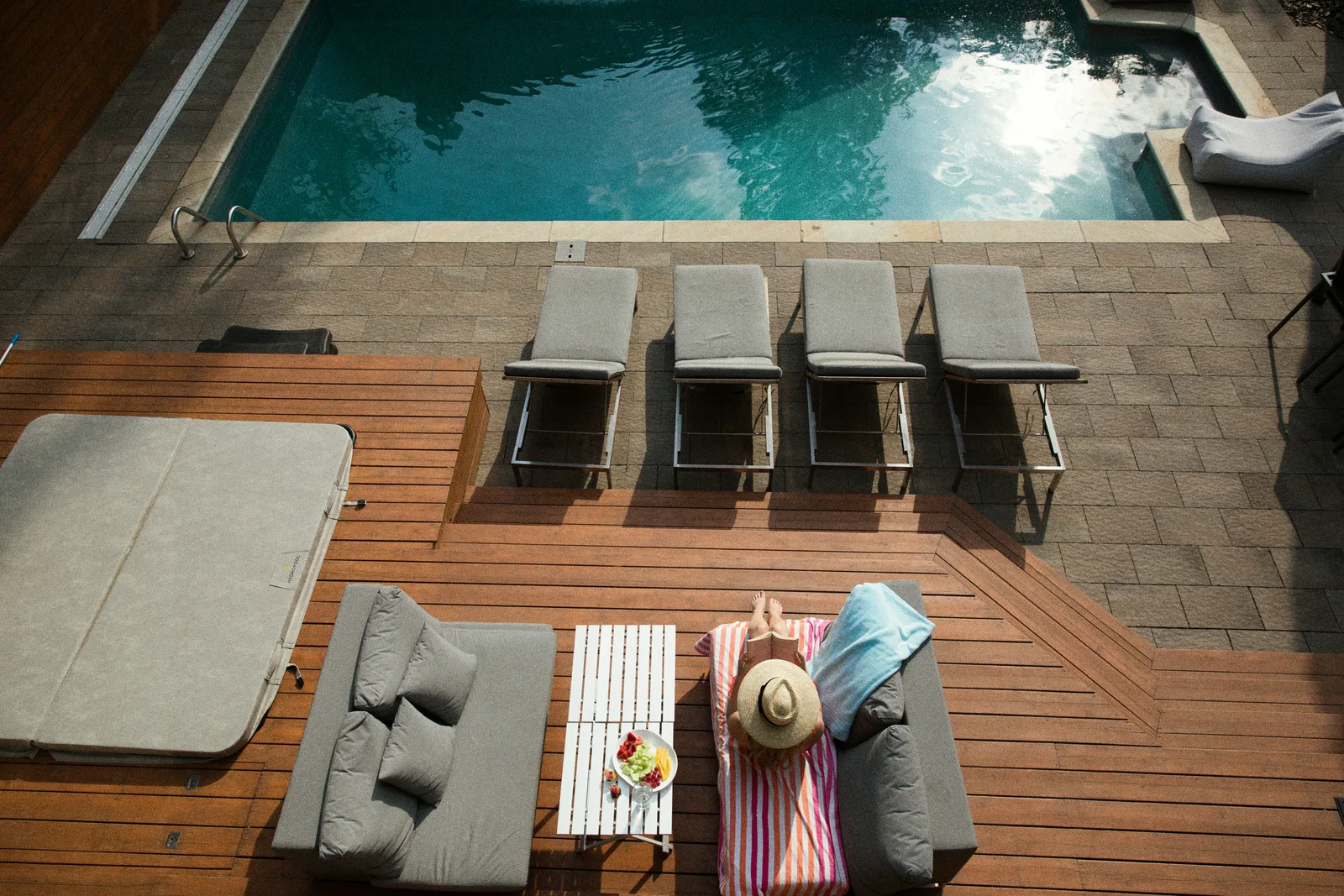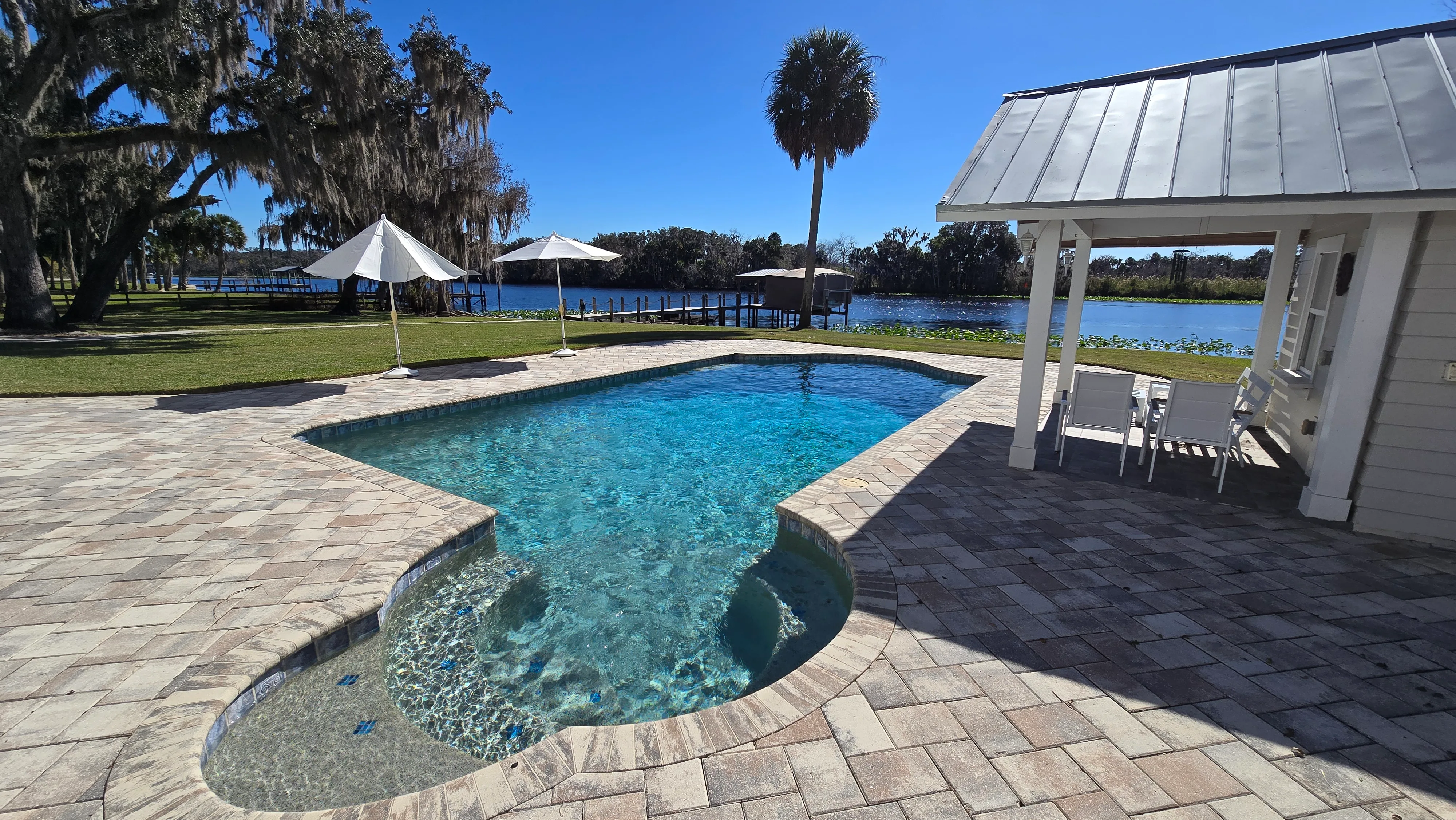
See what happens during a custom pool build in Central Florida, from permits and excavation to plumbing, finishes, startup, and handoff.
Building a custom pool in Central Florida involves more sequential phases and stakeholder coordination than most homeowners anticipate before the project begins. A standard gunite build from permit application to final inspection runs 8 to 14 weeks, with site conditions, weather, and municipal permit office processing times accounting for most of the variation. Understanding each phase in advance eliminates the most common friction points and keeps expectations aligned with the actual build timeline.
Design and Permitting: The Longest Phase on Paper
Pool design starts with a site evaluation covering setback distances from property lines, utility line locations, soil composition, and drainage patterns. After a design is finalized and signed off, the contractor submits permit applications to the local building department. In Volusia, Seminole, Orange, and Lake counties, standard residential pool permits typically take 2 to 4 weeks to approve. Projects near wetlands, HOA-restricted lots, or properties with nonstandard setback requirements often require additional review time that is outside the contractor's control.
Excavation and Steel Framework

Excavation is the phase that produces the most visible progress in the shortest time. A standard pool shell is excavated in one to two days. The steel reinforcement framework is then tied by hand inside the excavated shell over two to three days. A county building inspector must pass the steel inspection before gunite can be applied. Failing this inspection - most often due to rebar spacing or concrete cover requirements - adds 3 to 5 days to the project schedule.
Gunite Application and the Curing Period
Gunite is pneumatically applied concrete sprayed at high pressure against the steel framework. A typical 400 to 500 square foot pool shell is completed in one day. The concrete then requires a minimum of 7 days of curing before any load is placed in the shell. During this window, the surface is kept wet to prevent cracking. Shortening the curing period is one of the most consequential shortcuts a contractor can take: cracks that develop from improper curing are structural and expensive to address after the pool is finished.
The Remaining Phases in Order
- Plumbing rough-in runs simultaneously with or immediately after the gunite curing period
- Electrical rough-in for lighting, pump circuits, and automation systems follows plumbing
- Deck forming and pour typically occurs at the same time as tile and coping installation at the waterline
- Plaster or aggregate finish is the final surface applied before the pool is filled with water
- Equipment installation, startup chemistry, and initial water balance complete the build
The Most Common Cause of Timeline Extensions
"Weather delays and permit inspection scheduling account for roughly 80% of timeline extensions on Central Florida pool builds. Neither is within the contractor's control, and both are a normal part of the process."
- Dave Cole, Cole's Pool Service & More
Homeowners who schedule landscaping, fence installation, or furniture delivery immediately after the estimated completion date frequently encounter conflicts when the pool is not complete on that date. Build timelines provided at the contract stage are estimates, not commitments. A two-week buffer between the contractor's projected completion and any dependent event is a reasonable planning assumption for a first-time pool build in Florida.
Material Decisions That Must Be Made Before the Build Starts
Tile, coping, and plaster or aggregate finish selections must be finalized before the corresponding phase begins. Most contracts include a deadline for these decisions, and missing that deadline is the primary owner-driven source of schedule drift. A material selection pending for three days can translate to a week of delay when the crew has moved to another active project. Having these decisions made before the permit is submitted puts the project in the best possible position.
Dave Cole
Dave Cole founded Cole's Pool Service & More in 2008 after completing his military service. Based in Central Florida, he holds Florida state contractor licensing and has personally overseen several hundred pool builds, renovations, repairs, and long-term maintenance accounts across Volusia, Seminole, Orange, and Lake counties. His writing draws directly from what he encounters in the field every week.
References
- 1.Florida Building Commission. (2023). Florida Building Code. Florida Department of Business and Professional Regulation. https://floridabuilding.org/
- 2.Association of Pool & Spa Professionals. (2023). ANSI/APSP-5 American National Standard for Residential Inground Swimming Pools. https://www.apsp.org/
- 3.Florida Department of Health. (2023). Public Swimming Pools and Bathing Places Program. https://www.floridahealth.gov/environmental-health/swimming-pools/index.html